Echoes Across Domains
In the architecture of nature, certain motifs recur with extraordinary fidelity — spirals in galaxies and snail shells, symmetry in snowflakes and starfish, fractal branching in veins and lightning; the scales of a pangolin and the plates of a turtle shell; the polygonal patterns of cracked mud; the cellular mosaics in plant leaves; the organised layers of tree rings, onion skins, atmospheric layers; the streamlined shapes of dolphins, sharks, seals, and penguins.
These patterns do not respect taxonomic boundaries or material substrates. They leap across kingdoms, classes, forms and elements, showing up in minerals, microbes, mammals, and even in the laws that govern motion, light, gravity and the behaviour of galaxies. Their recurrence is not merely aesthetic — it's structural, functional, and mathematically precise.
How is it that the same design principles emerge in such radically different contexts? Why should the fractal logic of fern leafage mirror the dendritic spread of a river delta? How is it that the compound eye of a fly echoes the tessellated geometry of crystalline quartz? Evolution's researchers sometimes reply with the refrain: “This is the way things are!” Not exactly a probative scientific response! These principles deserve a deeper search: Why should this “way” manifest itself in such a precise way, confined to specific margins (see the article ‘The Margins Puzzle: Boundaries and Limitations' available in the book). These are not superficial resemblances — they are deep symmetries; convergences of form and function that indicate a unifying grammar beneath the surface diversity. And yet these are convergences that span, not merely all forms living and non-living on our home planet, but the entire cosmos!


Evolutionary theory attempts to deal with these phenomena by attributing certain similarities of living forms to convergent natural selection: the idea that similar environmental pressures “sculpt” similar solutions. But this explanation, elegant in its simplicity, begins to fray when we consider that these convergences span, not just species or ecosystems, but entire domains of existence — when the same motifs appear in animate and inanimate matter, in biological systems and physical laws, in the microcosm and the macrocosm; e.g. when the characteristics of sexual reproduction and the maturation of young are found in almost every branch of Darwin's “Tree of Life.” — (See the discussion on the problems this poses for orthodox evolution in the article 'Daddy, where do babies come from?')
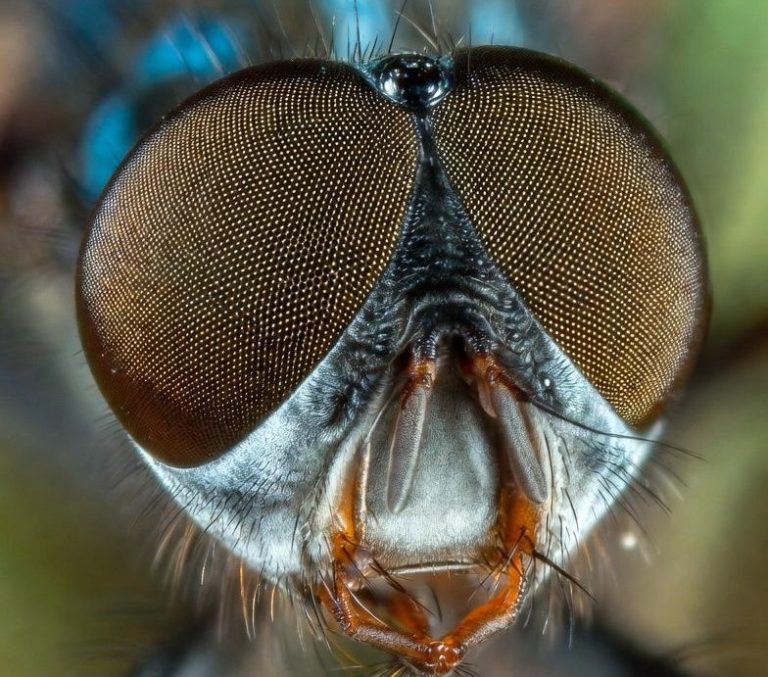
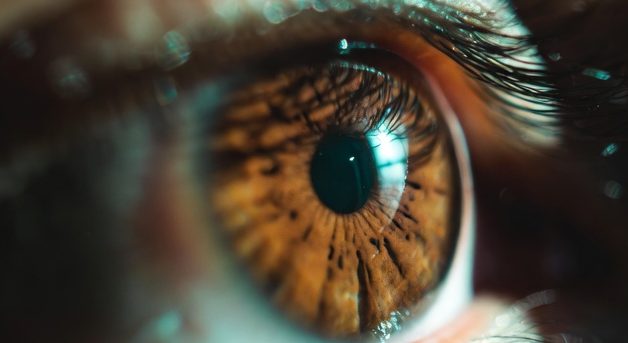

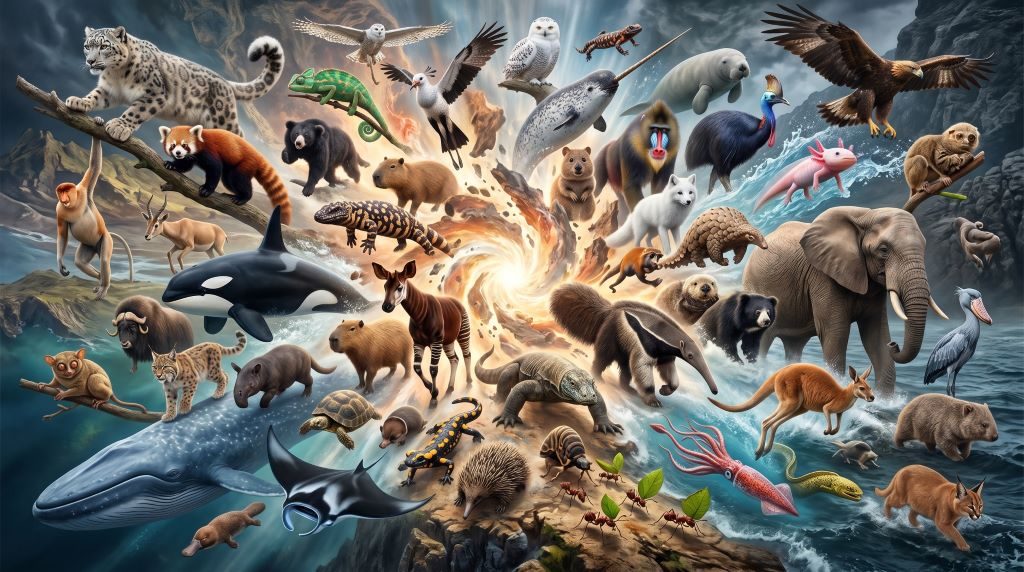
The impressive consistency of form in the reality of nature and the cosmos.
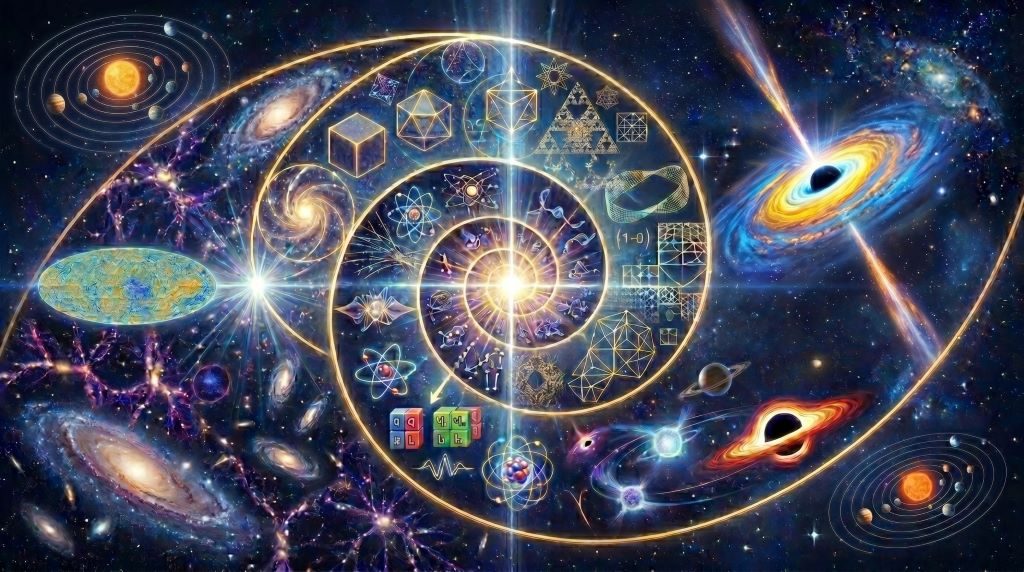
Mistrust in Orthodox Evolution
This website explores these cross-domain design echoes — not as anomalies, but as clues. Clues that the universe is governed, not by blind chance and incremental adaptation, but by deeper principles of order, resonance, and constraint; principles that weave a tapestry of consistent form, and a foundational framework so finely tuned that the axiom that its emergence was by accident strains the boundaries of credulity beyond their breaking point. — (See also the discussion 'The Margins Effect: A Puzzle for Evolutionary Narratives', available in the book).
We will examine examples from biology, geology, physics, and cosmology — each a case study in the recurrence of consistent form. And we will ask: Could such complexity and defined order really arise by means of the evolutionary mechanisms of natural selection and survival of the fittest, according to the current theories of unchallenged orthodoxy?
Or does the evidence point to something more — an architecture of reality that is profoundly deeper than the traditional narratives?