The Potent Paradox
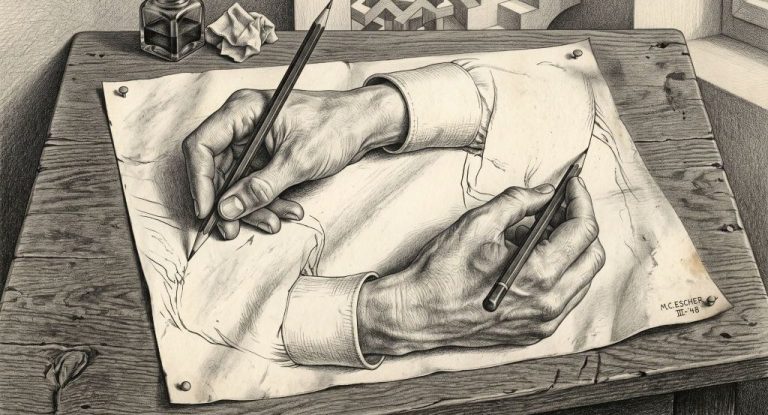
In reality, evolution is saying:
"Life created the conditions
for the arrival of life."
🎲 Chaos, Eloquently Explained
Life, we are told, is the outcome of random events sculpted by natural selection. Yet the deeper we look, the stranger this story becomes. Evolutionary theory is presented, not merely as a process acting on life, but as a pattern that undertook to prepare the stage before life even arrived; a series of inter-related, layered mechanisms that somehow preceded their own existence. This is the paradox at the heart of tradition’s most widely accepted biological narrative. — (See 'Emergence Before Mechanism' below.)
✍️ The Algorithm that Wrote Itself
The paradox lies in the observation that the very architectures — the compatible laws, consistent principles, fine-tuned constants, the information-rich systems — used to explain the natural phenomena around and within us, exhibit characteristics that undermine the explanations provided by orthodox evolution.
Supporters of the traditional view of evolution seek to explain these self-sufficient, self-repairing and persistent characteristics using blind directionless processes they are often powerless to duplicate. The more successful experiments that seek to match theoretical models only serve to provide empirical proof of the requirement for intentional management of ordered and formatted design — especially to the degree of the impressive, sophisticated, diverse and intricate designs manifest in nature.
🧬 The Semantics That Betray Purpose
The deeper scientists venture into molecular mechanisms, the more the lexicon resembles that of engineering, computation, management:
DNA is a “code” ...
Ribosomes “translate” ...
Enzymes “edit” ...
Cells “signal” ...
Additional examples include:
- “Messenger RNA” conveys the idea of purposeful delivery of information.
- “Promoter regions” suggest initiation points, like a start button.
- “Enhancers & silencers” imply regulatory control, akin to volume knobs or switches.
- “Proofreading enzymes” suggest editorial review and correction.
- “Splicing” evokes film editing and modular assembly.
- “Protein folding” implies origami-like precision, foreknowledge of functional needs, and purposeful structure.
- “Scaffold proteins” suggest structural frameworks for organisation.
- “Gene regulatory networks” suggest governance and orchestration.
- “Feedback loops” imply self-regulation and predictive-adaptive control.
- “Cells ‘decide’ to differentiate” suggests volition or choice.
These terms are not poetic flourishes; they are embedded in the technical language of science's laboratory protocols and peer-reviewed literature. Yet they betray an awareness of the underlying goals that drive cellular, organ, and animal growth. And such goals cannot come from a goalless process!
🎩 Instructions Not Included
This semantic architecture is not neutral. It carries conceptual baggage: the implication of purpose, coordination, and teleological (future awareness) design. When scientists describe transcription errors (biological typos) as “mutations,” or refer to “proofreading” enzymes, or “regulatory networks,” they invoke a framework that presupposes a standard, a calibrated deviation, a planned corrective mechanism that foresees any potential future mistakes and aberrations. These are hallmarks of systems designed with forethought.
The late Sir Francis Crick (British theoretical molecular biologist) famously remarked: “Biologists must constantly keep in mind that what they see was not designed, but rather evolved.” The irony is palpable! The very need for such a disclaimer indicates that the phenomena under observation persistently evoke the appearance and notion of intentional design. Crick’s caution is not a scientific conclusion; it's a philosophical precommitment, an appeal for readers to turn away from alternative conclusions, irrespective of the potential scientific value of those conclusions.
This linguistic paradox reveals a deeper tension: the tools of description betray the assumptions of the describer. If biology is a language, then its grammar is teleological — i.e. with characteristics of forethought and planning — even when its authors insist otherwise.
⚛️ Cosmic Coin Toss
Beyond biology, the physical scaffolding of life's context presents its own conundrum. The universe appears exquisitely calibrated for specified complexity. For example:
- The calibrated variable strength of gravity at every incremental distance, stretching to infinity at ever reducing values (see the article 'The Enigma of Einstein's Gravity').
- The balanced and precision-calibrated strength, yet fixed range, of the strong nuclear force (which is a specific value under a range of conditions, around 10³⁸ times greater than gravity).
- The consistent ratio of the size of the electron to the proton.
- The stable and consonant charge of every electron in the universe.
- The ratio of dark energy (ΩΛ) (or its latest "current" theoretical equivalent).
These few examples fall within extremely narrow bands to permit the successful emergence of stars, chemistry, life, and consciousness. (See the article ‘Was the Universe Fine-tuned for Life?’) A slight deviation in any of these constants would render the cosmos inert or chaotic, and life itself either impossible or meagre.
This fine-tuning problem is not merely a philosophical talking point — it is a recognised puzzle in cosmology and theoretical physics. The ”anthropic principle” (the idea that the universe must be the way it is — finely tuned for life — because we’re here to observe it) attempts to sidestep the issue by suggesting that “we observe a life-permitting universe because only such a universe allows observers.“ But this is a tautology, not an explanation. It describes the conditions that exist to permit observation, without accounting for their origin. — (See the discussion on 'Has Fine-tuning Been “Debunked”?')
🔁 Emergence Before Mechanism
One of the most profound paradoxes in evolutionary theory lies in its attempt to explain the emergence of the very mechanisms it infers — mechanisms that are said to make evolution possible ... a self-referential dilemma!
For example, the genetic code, the cellular machinery that interprets it, and the metabolic systems that sustain it — all must exist before “natural selection” can begin to operate. Yet evolutionary theory seeks to account for their origin using the very processes that presuppose them.
This is a form of “epistemic recursion”: a system that supports itself by its own bootstraps (where the phrase “booting a computer” comes from), or a house that builds itself using its own blueprints. It’s akin to a book writing its own grammar, a language inventing and describing its own syntax, or an Artificial Intelligence system compiling its own operating system from raw materials. Absurd? Yet that is the reality that the underlying logic of traditional evolution portrays!
Evolution is effectively saying: “Life created the conditions for the arrival of life.”
Consider these further instances of circular reasoning:
🌀 1. The “pre-adaptation” paradox
Evolutionary accounts often say a trait evolved because it later became useful. But usefulness after the fact cannot explain why the trait arose in the first place.
- If a proto‑wing (an "early" wing) “evolved for gliding,” that presupposes partial fully functional wings already existed.
- If early photoreceptors “evolved because light detection was advantageous,” that presupposes some light‑sensing structure already capable of detecting light.
The explanation assumes the existence of the very proto‑trait (early evolutionary) whose origin it is supposed to explain.
🧩 2. The “incremental assembly of non-incremental systems” problem
Many biological systems are non‑decomposable: they only function when all parts are present simultaneously (placenta, immune tolerance, meiosis machinery, neural signalling networks).
Evolutionary logic says: “Each part evolved gradually because each part was individually advantageous.”
But such parts are not individually advantageous unless the whole system already exists.
The explanation presupposes the completed system to justify the evolution of its incomplete components.
🧠 3. The “emergence of agency from non-agency” loop
Evolutionary narratives often say:
- organisms “solved” problems,
- lineages “experimented,”
- species “adapted,”
- cells “cooperated,”
- brains “optimized.”
But these verbs presuppose agency, intentionality, or goal‑directed mechanisms — capacities that the theory simultaneously insists do not exist here!
The explanation uses teleological (purposeful) language to describe a process that is said to exclude teleology.
🧬 4. The “selection requires selection” regress
Natural selection requires:
- variation,
- heritability,
- differential survival,
- stable reproduction.
But these prerequisites themselves require:
- genetic replication fidelity,
- error‑correction machinery,
- metabolic stability,
- membrane integrity,
- coordinated cell division.
Evolutionary logic says these systems evolved because selection acted on them. But selection cannot act until these systems already exist.
Selection is invoked to explain the origin of the very conditions required for selection.
🧠 5. The “cognition-lite” fallacy
Many evolutionary explanations rely on proto‑cognitive (early brain) capacities:
- “early organisms sensed nutrients,”
- “primitive nervous systems coordinated movement,”
- “proto‑animals [early animals] responded to threats.”
But sensing, coordinating, and responding presuppose:
- receptors,
- signalling pathways,
- neural circuits,
- behavioural integration.
The explanation assumes minimal cognition to explain the origin of cognition.
🧱 6. The “structure explains structure” loop
Evolutionary accounts often say:
- “complex structures evolved from simpler structures.”
But “simpler structures” are themselves already:
- highly organized,
- chemically precise,
- information‑rich,
- functionally integrated.
A “simple cell” is not simple. A “simple replicator” is not simple. A “simple signalling molecule” is not simple.
The explanation treats structured precursors as unstructured, then uses their structure to explain later structure.
🔁 7. The “fitness explains fitness” tautology
A classic circularity noted even by evolutionary theorists:
- “The fittest organisms survive.”
- “How do we know they were the fittest?”
- “Because they survived.”
This collapses into:
Survivors survive.
Even sophisticated versions (“fitness is reproductive success”) merely restate the outcome as the cause.
Fitness is defined by survival, and is then used to explain survival.
🧪 8. The “invisible past” inference loop
Evolutionary explanations often rely on unobservable ancestral conditions:
- “This trait must have evolved because ancient populations faced X.”
- “We infer X because the trait exists.”
This is another circularity identified in evolutionary narratives: traits are explained by hypothetical selective pressures, and those pressures are inferred from the traits.
The trait justifies the imagined environment, and the imagined environment justifies the trait.
🧬 9. The “homology determination” circle
Philosophers of biology note that homology (shared ancestry) is often determined using evolutionary theory, then used to support evolutionary theory.
Evolution is used to identify homologies, and homologies are used to validate evolution.
🧠 10. The “emergence of consciousness from noticing” loop
- “Consciousness emerged when matter became complex enough to notice itself.”
But “noticing” is already a conscious act. Thus the explanation presupposes the phenomenon it claims to explain.
Consciousness is invoked to explain the origin of consciousness.
🧩 11. The “coordination before coordination” paradox
Multicellularity, symbiosis, and cooperative behaviour require:
- signalling,
- adhesion,
- conflict suppression,
- resource allocation,
- boundary maintenance.
Evolutionary accounts say these capacities evolved because cooperation was advantageous. But cooperation cannot be advantageous until these capacities already exist.
Coordination is used to explain the origin of coordination.
🐾 12. The “major transitions require minor transitions” illusion
Major evolutionary transitions (origin of life, eukaryogenesis, multicellularity, sexual reproduction, consciousness) are often described as:
- “a series of small steps.”
But each “small step” presupposes:
- stable heredity,
- integrated metabolism,
- regulated cell division,
- error correction,
- signalling networks.
These are not small steps; each of them is an entire system.
The explanation decomposes a non‑incremental leap into increments that themselves require the leap.
🧩 13. “Creatures survived because they developed survival instincts.”
But the development of such specific instincts presupposes not only intelligence and self-design capabilities, but some prior capacity to persist long enough to develop anything at all.
🧾 14. “Language evolved because early humans began communicating more effectively.”
But “communicating effectively” already assumes proto‑linguistic structure, intentional signalling, and shared meaning.
⚛️ 15. “Cells organised themselves into multicellular organisms because cooperation was advantageous.”
But such cooperation presupposes signalling, coordination, and boundary‑determinations.
These are capacities that only make sense after multicellularity, self-awareness, and intelligence somehow “emerge.”
🐣 16. “Mammals gave up on laying eggs because live birth was advantageous.”
This treats a major anatomical, developmental, and genetic transformation as if it occurred by a purposeful event — as if mammals had the simplistic choice of opting for one reproductive method over another.
Such a change requires complex coordinated (synchronous) functionality: a fully operational placenta, innovations in maternal–foetal signalling, immune tolerance, nutrient transfer, extensive blood vessel and nerve fibre integration; it also requires a re-coding of the instructions in the genome, among many other considerations. The many “incremental changes over considerable time” claimed by evolutionists do not help; after all, why would natural selection select any half-developed, useless, incomplete component of such a complex and critical system? (See also the article 'Daddy, where do babies come from?')

Evolutionists seek to explain the origin of design features using the very processes that presuppose those features!
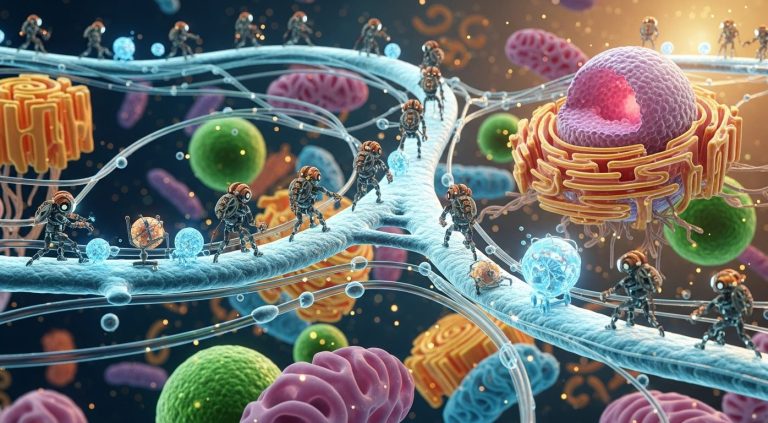
The intelligent input developed by evolutionists inadvertently adds
weight to the empirical evidence
for intentional order and planning.

Life is instantiated with the capacity
for perpetuity and a measure of
variety and self-transformation.
The question of the origin of life is not merely a chemical riddle — it also involves symbolic logic, information management, and functional integration of multi-layered specified complexity of such extensive depth and component inter-dependency that defy imagination.
This self-referential dilemma demonstrates that the architecture of life cannot be reducible to a blind, undirected mechanism. Instead it reflects a deeper and more intelligent principle: one in which employable natural complex systems are not somehow assembled following their fortuitous arrival, but in contrast they are instantiated with the potential, the capacity for perpetuity and a calibrated (limited) measure of variety and diversity.
In this view, evolution is not the origin of design — its principal narratives compete with the expression of a design embedded in the fundamental depth of the fabric of the natural world!
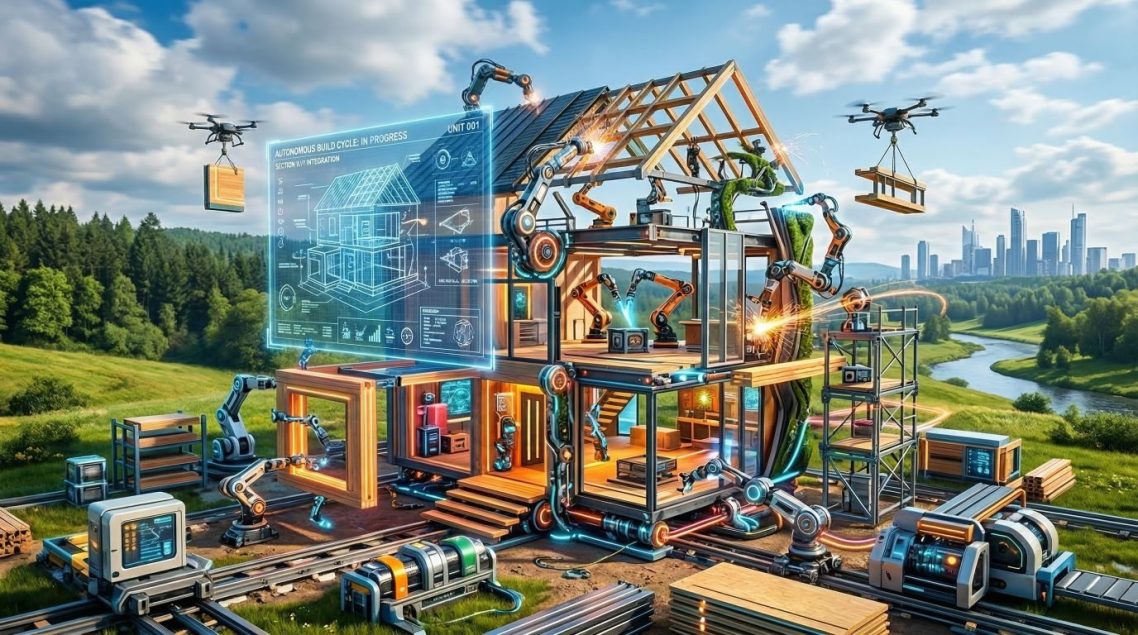
Could a house produce its own
blueprints and then build itself?