☕ The 2-minute Taster — to be Served with Morning Coffee
🌳 The “Wood” Wide Web: The Ecology of Silent Negotiation

“As each tree falls so does the earth's ability to heal itself and to adapt to the effects of our changing climate.”
— Hilary Benn, Secretary of State for Northern Ireland.
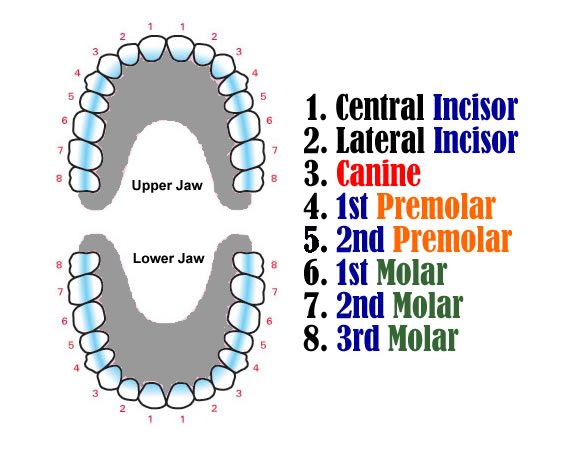
How could evolution sculpt the design of
our pearly whites if it had no concept of
the intended purpose of each tooth?

There are many more trees on earth than there are stars in the Milky Way! Our galaxy is estimated to have from 200 billion to more than 400 billion stars, but there could be more than three trillion trees on earth (that's around 1,000 trees for every star).
The Atmospheric Chorus Between Breath and Leaf
When you consider that a single mature tree can supply enough oxygen for two people for an entire year, that's a hefty supply of life's most essential gas! Of course the main supply of earth's oxygen comes from the oceans, for example from Phytoplankton; tiny, plant-like organisms that float in the sunlit surface layers of the ocean, and photosynthesis that converts sunlight, carbon dioxide, and water into energy — releasing oxygen as a by-product.
Trees have many remarkable properties. A large tree can lift 100 gallons (378 litres) of water from the ground and release it into the air in a single day! This is among the many sophisticated recycling routines that our earth manages perpetually. (See the section on 'Planets — Nurseries for Life' in the article 'Multi-tiered Coordinated Planning'.) One tree can absorb up to 48 pounds (almost 22 kilos) of carbon dioxide annually. Over its lifetime that's around a ton! Trees also have one of the longest lifespans of all organisms on earth and can live for many thousands of years.
Trees are essential to earth's animal life, as well as to humans. Their leaves, fruits, nuts, and bark feed countless species — from insects to elephants. Tree roots prevent erosion, maintain soil structure, and support microbial life essential for decomposing organic matter. Fallen leaves and branches decompose, enriching the soil and feeding detritivores such as worms and beetles. They also provide homes for birds, insects, mammals, and even amphibians.
Stability Drawn from Unseen Depths!
The root system of trees is often misunderstood. We sometimes think of tree roots sinking deep down into the earth to obtain their nutrients and water. However, most tree roots grow within the top 18–24 inches (45–60 cm) of soil, where oxygen, water, and nutrients are most abundant. Roots extend 2–3 times beyond the canopy's drip line, and in some cases, up to five times the tree's crown radius, rather than searching deeper into the ground.
Interwoven Alliances of a Living Network
Despite the far-reaching sprawl of their roots, trees are rarely combative neighbours. By contrast, they are notable for extraordinary symbiotic relationships — particularly with fungi — forming vast subterranean networks often dubbed the wood wide web. Through these mycorrhizal connections, trees exchange nutrients, relay distress signals, and even bolster struggling companions. One striking example of this arboreal altruism is the transfer of carbon from mature trees to shaded saplings beneath the canopy, a quiet act of support that helps ensure their survival.
Roots, too, display a kind of spatial intelligence — growing away from densely occupied zones to minimise competition. In mixed-species forests, some trees maintain non-overlapping root territories, fostering not only peaceful coexistence but mutual benefit. Even in urban landscapes, where soil design and root barriers enforce separation, the principle remains: conflict is avoided through superior arrangement.
🌐 Does this intricate ecology — woven from cooperation, restraint, and unseen generosity — not mirror the symbolic depth of the accompanying image? The precisely balanced spheres evoke a quiet intelligence, a choreography of coexistence. Just as trees navigate complexity with grace, so too the image suggests an underlying order — an ecosystem of deeper meaning held in accurate and sustained equilibrium.

Where is the evidence for evolution’s claimed “incremental improvements”?
The silence can be said to be deafening.