

SUNDAY
12 July 2026

☕ 2-minute Taster — to be Served with Morning Coffee
♻️ Nature's Recycling: Nothing is Squandered

“The earth's recycling systems — the carbon, nitrogen, and water cycles — are a symphony of processes so perfectly tuned that they sustain life with an elegance that no human engineer could replicate.”
— Dr. Paul Falkowski, biogeochemist.
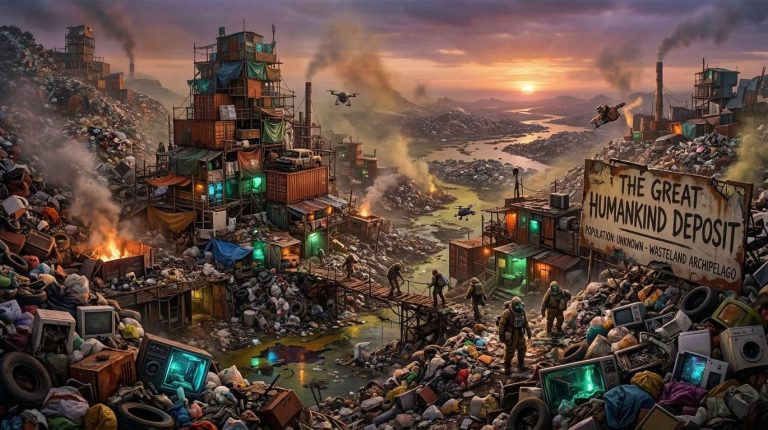
In stark contrast to human linear systems:
Nothing goes to waste in a forest.
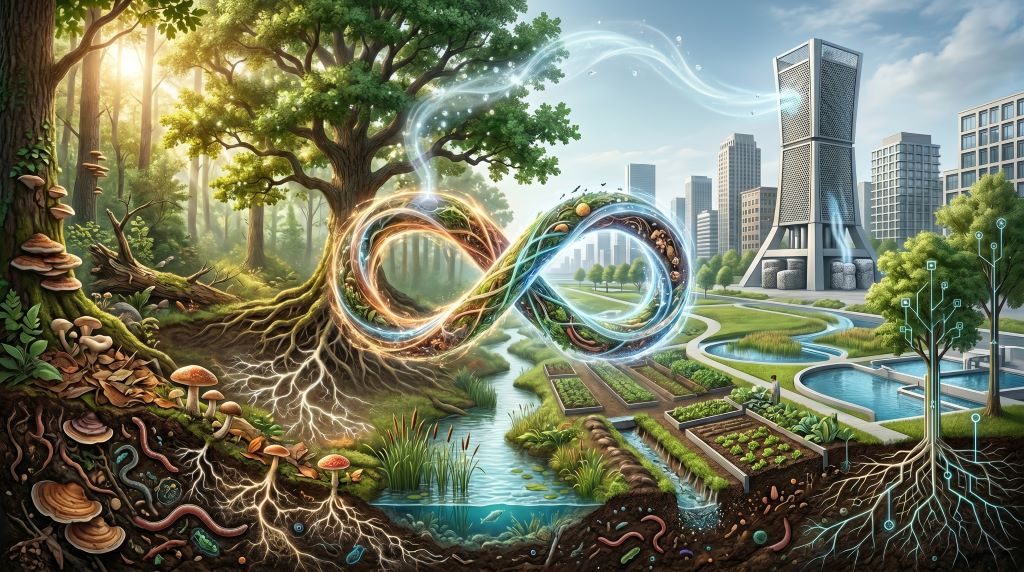
Nature's recycling systems are masterpieces of biochemical choreography — elegant, efficient, and perpetually regenerative; systems of infinite loops!
Many human systems are mere copies from nature: Composting systems, carbon capture tech, urban water reclamation, wastewater treatment, phosphorus recovery, Mycorrhizal networks (the “wood” wide web), guerrilla gardening and seed bombs, to name a few.
Here are some of the most striking examples built into nature, each a testament to ecological ingenuity:
🌱 1. Decomposition & Nutrient Cycling
- Agents: Bacteria, fungi, insects, and worms.
- Function: Break down dead organic matter into nutrients like nitrogen, phosphorus, and potassium.
- Impact: Enriches soil, fuels plant growth, and sustains food webs.
🌍 2. Carbon Cycle
- Photosynthesis: Plants absorb CO₂ and convert it into sugars.
- Respiration & Decomposition: Animals and microbes release CO₂ back into the atmosphere.
- Oceanic Reservoirs: Oceans absorb and regulate atmospheric carbon.
- Efficiency: Carbon atoms circulate through biosphere, lithosphere, and atmosphere with amazing precision.
💧 3. Water Cycle
- Processes: Evaporation, condensation, precipitation, infiltration, transpiration.
- Recycling: The same water molecules have cycled through clouds, rivers, soil, and living organisms for millennia.
- Design elegance: Zero waste, global distribution, climate regulation.
🌾 4. Nitrogen Cycle
- Fixation: Bacteria convert inert atmospheric nitrogen into usable forms.
- Assimilation: Plants absorb nitrates; animals consume plants.
- Denitrification: Bacteria return nitrogen to the atmosphere.
- Analogy: Nature's currency exchange — turning unusable nitrogen into biological gold.
🪨 5. Phosphorus Cycle
- Source: Weathering of rocks releases phosphorus into soil and water.
- Movement: Absorbed by plants, passed through food chains, returned via decomposition.
- Unique trait: No gaseous phase — slow, sedimentary elegance.
🐛 6. Forest Floor Recycling
- Leaf litter & detritus: Broken down by fungi and invertebrates.
- Mycorrhizal networks: Fungi trade nutrients with plant roots.
- Outcome: Fertile soil, biodiversity, and resilience.
- “Nothing goes to waste in a forest” is not just poetic — it exemplifies the efficiency of earth's ecosystems.
🧠 Nature's Upcycling vs. Human Recycling
Unlike human linear systems, nature doesn't just recycle — it upcycles.
- Dead matter becomes soil architecture
- Leaf litter becomes a water‑retention system
- One organism's toxin becomes another's tool
- Termite mounds use metabolic heat
- Carcasses become biodiversity hotspots
- Nutrient pulses trigger regeneration
- Bones become scaffolding for reefs
- Fallen logs become nurseries
- Fire releases locked nutrients
- Heat from decomposition fuels ecosystems
- Parasites become symbionts
Every particle of every atom is part of a story that never ends! Nature's recycling is just one more example of superbly coordinated systems.
‘Look deep into nature, and you
will begin to understand the world better.’
— sentiments attributed to Albert Einstein.
