

TUESDAY
11 August 2026
"Empirical science
unravelling the
wool that
covers the eyes!"
🍹2-minute Sample: Best With a Warm Companion Drink
🕰️ The “Rate of Living” Conundrum
“We do not 'come into' this world; we come out of it, as leaves from a tree.”
— Alan Watts, British-American writer and orator.
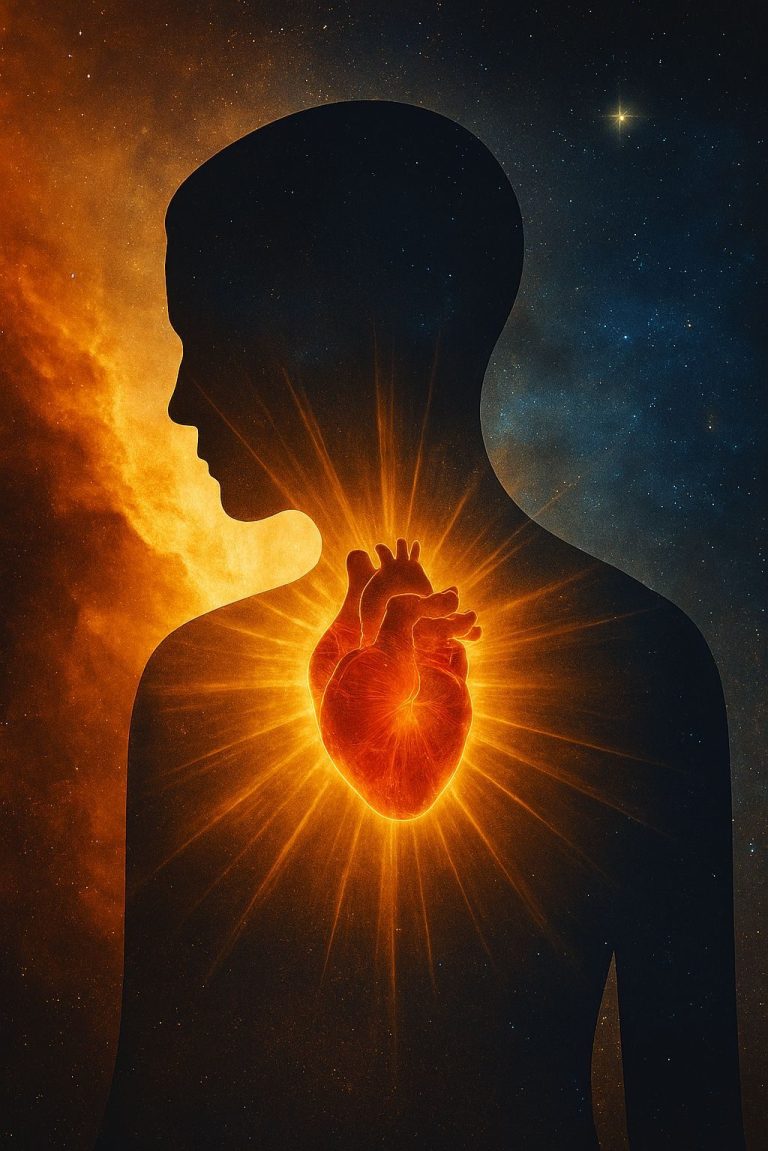
There is only one species on earth that
does not fit in with this formula!

Have humans really managed to extend
this lifespan formula by themselves?
The average lifespan for humans is estimated to be a little over 70 years (~75 for females, ~70 for males — how unfair is that!) This seems meagre when compared to many trees that can live for thousands of years. Even compared to some other creatures, this seems to be a small amount:
- The oldest living land animal is Jonathan the giant tortoise: 190 years (in fact, as of the year 2025, he was still going strong and living on the island of Saint Helena).
- The longest-lived mammal is the bowhead whale: 211 years.
- The longest-lived vertebrate is the Greenland shark: 400 years. (They don't even begin to procreate until they're around 150 years old!)
- The oldest verified individual creature is an ocean quahog clam by the name of Ming: 507 years!
🧠 The Beat Goes On … Until It Doesn't
There is, however, a curious twist to this tale! Scientists have studied the lifespans of animal species, and a fascinating distinct relationship has been discovered involving:
- Resting heart rate
- Body size
- Lifespan
And this is maintained consistently throughout animal kingdoms.
In essence:
- Smaller animals (such as mice) have faster heart rates and shorter lifespans
- Larger animals (like elephants) have slower heart rates and longer lifespans
Despite these differences, the total number of heartbeats per lifetime tends to hover around a mean average of 850 million.
It's as if there is a metabolic “budget” or “standard currency” for all species.
Well, almost all! There is one species on earth that does not fit in with this formula!
👤 The Heartbeat Conspiracy: One Species Didn't Get the Memo
Humans total around 3 billion heartbeats for the average lifespan! We break the above pattern in two key ways:
♥ Our resting heart rate (about 60–80 bpm) is relatively low for our body size.
♥ Our lifespan is very much longer than it should be compared to this formula.
Scientists speculate on the reasons why this should be the case, usually involving the many attributes of humans that set us apart from animals: intelligence, social interaction, medical advances. However, these attempts to explain the phenomenon revolve around a single principle: humans are vastly superior intellectually to any other creature on earth!
But can they dramatically extend their own average lifespan? — (See the article 'Infinite time, monkeys, and typewriters!')
🧬 Life on a Metabolic Tab … Except for One Freeloader
If we compare our heartbeats to a kind of biological currency, most mammals spend theirs quickly. Humans, however, somehow extend that currency by a very considerable margin.
Here's the burning question though: Have humans really managed to extend this lifespan formula by themselves? What an incredibly rich person he or she would become if they were to stumble on this formula! — (See the article 'Multi-tiered Coordinated Planning' for additional info.)
📜 Conclusion: Evolution's Blind Spot
The evidence included here is not a minor curiosity — it's a fundamental anomaly that undermines the prevailing, mechanistic story of orthodox evolutionary biology. Humanity's three‑billion‑beat defiance is not simply an exception; it's a rebellion against the very framework that is used to explain us. Evolutionary narratives insist that every trait is sculpted by survival pressures and reproductive advantage, yet our lifespan and metabolic rhythm refuse to conform. — (See also 'The Human Brain: The Most Intricate Enigma,' available in the book).
To explain this anomaly with appeals to intelligence, culture, or medicine is to miss the deeper problem: these appeals are external, contingent, and recent, while the anomaly itself is ancient and intrinsic. Humans have always lived far beyond this apparent metabolic allowance. This is not a quirk belonging to modern times — it's a structural contradiction.
Thus, the orthodox narrative falters. It cannot account for why one species alone breaks the heartbeat law so dramatically, nor why our biological “currency” stretches so far beyond its calculated limits. The orthodox human story, it seems, is not merely another chapter in the evolutionary ledger, but a rupture in its logic — a reminder that the most important truths may lie outside the popular equations of natural selection.
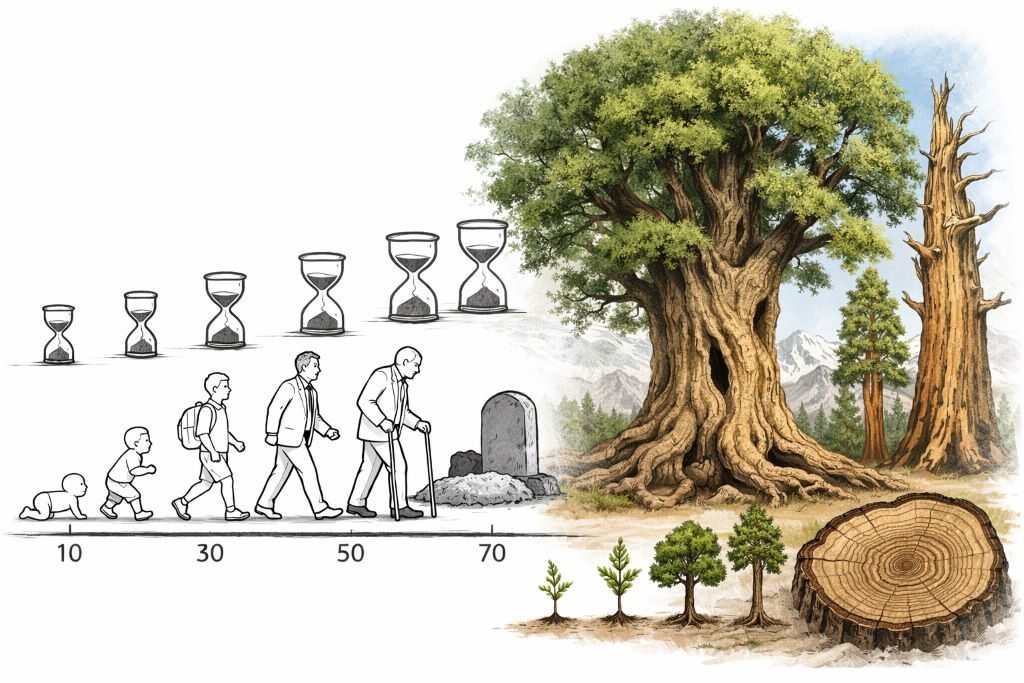
Can orthodox evolution account for the reason
why one species alone breaks the heartbeat law?
(See a far greater hurdle for orthodox evolution in the article:
'The Symphony Before the Composition')
