

FRIDAY
21 August 2026
"Empirical science
unravelling the
wool that
covers the eyes!"
🍹2-minute Sample: Best With a Warm Companion Drink
🧩 The Margins Effect:
A Puzzle for Evolutionary Narratives
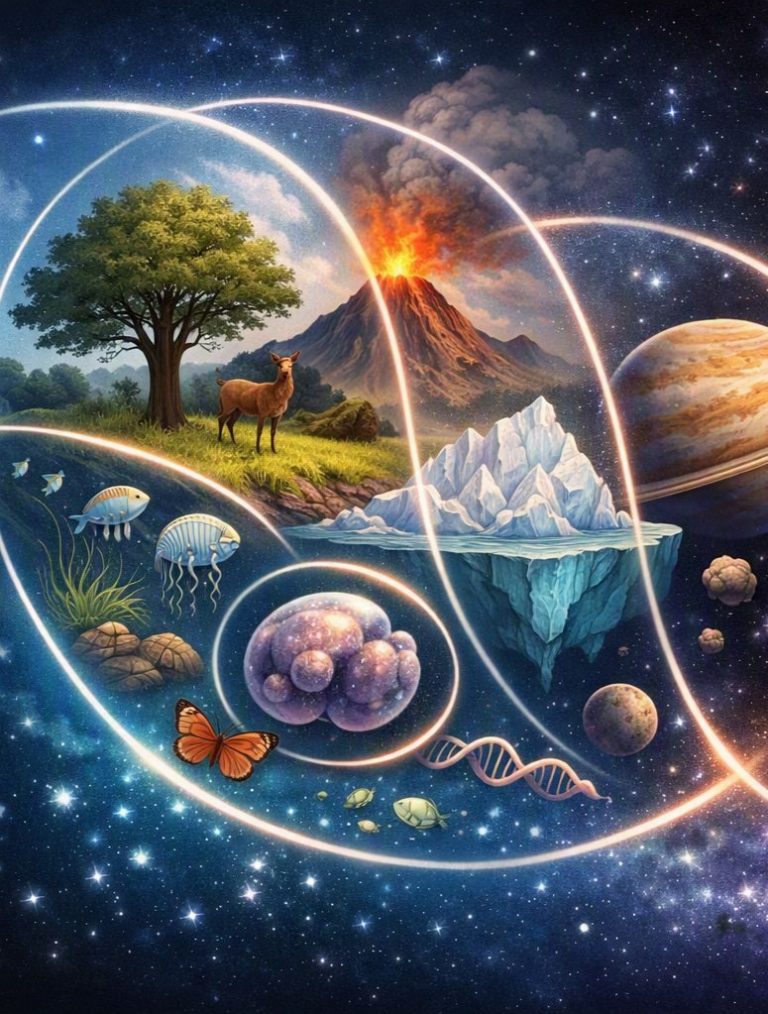
“The beauty of a living thing is not the atoms that go into it,
but the way those atoms are put together.”
— the late Dr. Carl Sagan, Planetary Scientist at Cornell University.
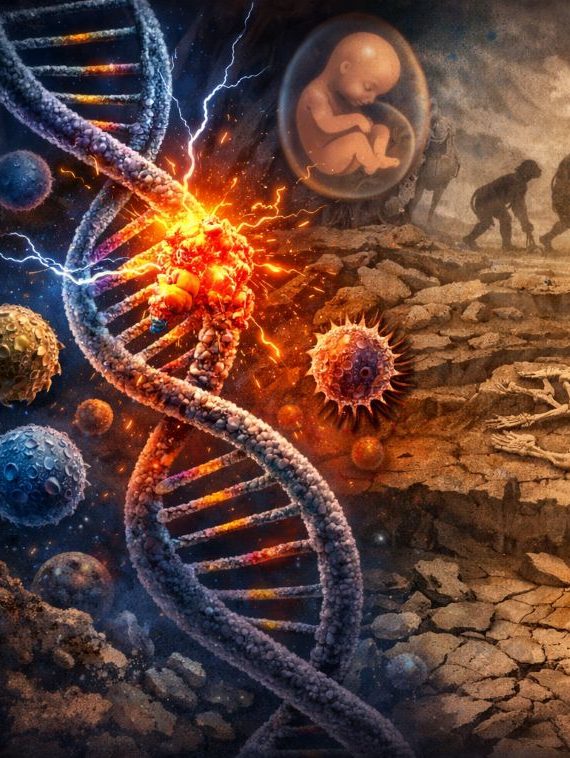
Life is not an absurd random walk
through “possibility space” —
The Margins Effect — the hidden architecture
of nature and the cosmos; a set of silent
laws that keep life coherent & balanced.
Did evolution really specify these
rules, proportions,
constraints, and harmonies?
Why Do Nature's Forms Refuse Absurdity?
I. The Hidden Architecture of Constraint
Life parades its diversity as if it were boundless, yet everywhere we look the same quiet law holds: we see immense variety, but it is never wild or uncontrolled.
The entire cosmos and the life within it, both parade their diversity as if anything were possible, yet every form we encounter is quietly bounded. Creatures, behaviours, structures, and even galaxies express themselves only within narrow corridors they cannot breach. The universe does not spill into chaos nor does it exhibit grotesque extremes; it manifests limits — a disciplined gallery of archetypes, each permitted only a calibrated range of variation. What looks like freedom is in fact constraint, and what seems like chance is shaped by specific margins that hold everything in coherent form.
This is the Margins Effect — the pervasive, unspoken order that underpins biology, behaviour, scale, and even the fabric of the cosmos itself.
Life's shapes, patterns and behaviours are confined within this vast network of boundaries — margins so consistent, so universal, and so quietly enforced that they fashion every living form long before “natural selection” has any chance to speak.
II. Universe of Balanced Forms
Across the natural world, diversity and variety is immense — yet it is always restricted, constrained, controlled. Life manifests variation but never abandons coherence.
Consider the following motifs, which appear across domains, substrates, species, and epochs:
1. Faces That Never Become Absurd
Animals display a breathtaking range of facial structures — yet none drift into grotesque extremes (except maybe the blobfish).
- No mammal has eyes on stalks.
- No bird has a mouth that extends around its head.
- No primate has a nose the size of its torso, or that is grotesquely upside-down.
- No creature has a face so asymmetrical it becomes non‑functional.
- No human has a nose that is grotesquely upside-down.
2. Appendages That Obey Boundaries
Across all phyla:
- No creature has 47 legs.
- No vertebrate has 12 arms.
- No insect has wings the size of a sail.
- No fish has a tail that loops into a knot.
3. Behaviour That Never Becomes Unmanageable
We do not generally see animals whose natural behaviour is so violently unbounded that they must be constantly restrained to prevent catastrophic destruction.
- Predators hunt, but they do not annihilate their ecosystems; their aggression is purposeful, cyclic, and remains within set boundaries.
- Territorial species defend, but they do not wage endless, escalating, or nihilistic war (a small percentage of humans notwithstanding).
- Social animals compete, but they do not descend into permanent chaos; hierarchies stabilise, roles settle, conflict resolves.
- Even the most volatile creatures — bulls, wolves, big cats — operate within predictable behavioural margins shaped by instinct, ecology, and need.
- No species expresses behaviour that randomly oscillates between extremes; there is no animal that is serene one moment and explosively destructive the next . . . without cause.
4. Plants That Refuse Chaotic Forms
Plants vary endlessly, yet:
- Leaves do not grow in random geometric explosions.
- Roots do not form infinite fractal tangles.
- Trees do not sprout branches from the middle of their trunks at arbitrary angles.
- Flowers do not produce multiple petals on one side and none on the other; nor are they assembled in chaotic asymmetries, with spirals that break, ratios that drift, or colours that collide without pattern.
5. Sizes That Never Drift into the Absurd
Life exhibits scale, but only within a specified band:
- No insect is the size of a bus.
- No mammal is the size of a grain of sand.
- No bird has a wingspan of 10 metres.
- No tree grows to the height of a mountain.
- No fish reaches the length of a railway carriage.
- No microscopic creature scales up to human size.
6. Insects That Never Break Their Template
Insects manifest extraordinary variation, yet:
- They always have six legs; the limb‑count never improvises.
- Their body plan remains tripartite — head, thorax, abdomen — never reordered, merged, or multiplied.
- Their antennae never become tentacles, trunks, or grasping arms; they remain sensory instruments, not inventions.
- Their wings never become sails, fins, or membranes for gliding like bats; even the wildest forms obey aerodynamic discipline.
- Their exoskeleton never dissolves into soft skin or fur; the armour‑logic is never abandoned.
- Their eyes never drift into mammalian arrangements — no single central eye, no sideways human‑style pair.
- Their mouthparts diversify, but always within the insect template: mandibles, proboscises, stylets — never anything resembling beaks, lips, or jaws.
7. Birds That Never Escape Their Archetype
Birds exhibit variations of form, colour, size, and behaviour . . . but:
- None have four, five, or more wings; the archetype never proliferates its limbs.
- None have beaks that spiral, branch, or twist into ornamental shapes.
- None have feathers that grow like hair, in tangled mats or continuous strands.
- None fly in chaotic, unpredictable patterns; their flight obeys geometry, aerodynamics, and repeatable arcs.
- None reinvent their silhouette — no bird has a square body, a vertical tail, or legs emerging from the back.
- None abandon bilateral symmetry; even the most flamboyant species remain mathematically balanced.
8. Sounds That Never Exceed the Margins
Nature’s soundscape seems wild, yet it obeys margins as strict as any anatomy. Across forests, oceans, jungles, and skies, creatures vocalise with astonishing diversity — but always within disciplined limits.
- Birds sing, but none produce endless, unstructured noise; their calls follow patterns, intervals, and repeatable motifs. They are also (mostly) pleasing to the human ear.
- Fish communicate through clicks, pulses, and drumming, but never through continuous speech‑like streams; their signals remain brief, bounded, and functional.
- Whales generate haunting songs, yet even these vast oceanic broadcasts stay within fixed frequency ranges and recognisable structures; no whale invents a new acoustic geometry.
- Land animals roar, bark, bellow, and chirp, but none produce sounds outside their biomechanical corridor — no elephant whispers at ultrasonic pitch, no mouse bellows like thunder.
- Jungle soundscapes teem with life, yet they never collapse into unfiltered cacophony; each species occupies its acoustic niche, its allotted band of frequencies.
- Mating calls vary wildly, but never drift into absurdity — no creature broadcasts infinite tones, random noise, or chaotic sonic explosions (not counting the bombardier beetle).
9. Humanity: The Most Constrained Form
Human beings display cultural, intellectual, and emotional diversity — yet our physical form is astonishingly stable:
- No human has three arms; the limb‑pattern never proliferates.
- No human has a skull shaped like a cube, a cone, or a sphere; cranial geometry never abandons its template.
- No human grows to 12 feet tall; height varies, but only within a narrow biological corridor.
- No human exhibits radically different facial architecture: a vertically oriented mouth, a single central eye or multiple eyes, eyebrows that never form, eyelashes that never appear, teeth in absurd growth formations, alternative limb configurations.
- No human has ears that lack the folded, convoluted outer structure required for directional sound capture.
- No human develops new joints, extra ribs, or reconfigured muscle layouts; the blueprint never improvises.
- No human reinvents the silhouette — no vertical foreheads, no sideways jaws, no limbs emerging from the back.
III. The Cosmos Mirrors the Pattern
The Margins Effect is not limited to biology. The cosmos itself displays the same refusal to drift into extremes:
- Stars form within narrow mass ranges; none are the size of planets after completing their formation, none swell to disruptive sizes.
- Planets orbit within stable corridors; they do not zig‑zag, ricochet, or wander arbitrarily through space.
- Galaxies maintain coherent shapes — spirals, ellipticals, clusters — never dissolving into chaotic, unbounded swarms.
- Chemical elements follow strict patterns; no random atomic inventions appear between carbon and nitrogen.
- Molecular bonds obey tight constraints; electrons never improvise new geometries beyond the permitted set.
- Even spacetime itself behaves with disciplined consistency — curvature, expansion, and gravity all operate within defined resolute margins.
The universe is not a playground of wild forms beyond this exquisite set of controlled formats. It's a gallery of disciplined variety: endless expression, all confined within the quiet architecture of cosmic order.
IV. The Implications for Evolutionary Theory
If the universe were a canvas of unrestrained possibility, we would expect:
- chaotic forms
- runaway divergence
- grotesque extremes
- biological experiments without coherence
- ecosystems without balance
- life that drifts into absurdity
But we do not see anything like this. Instead, we see:
- stability
- symmetry
- proportion
- recurrence
- bounded variation
- disciplined creativity
These margins are not incidental. They are a signature that permeates the cosmos.
They reveal a universe containing parameters, principles, laws that do not merely permit life — they shape it, channel it, and restrain it with remarkable consistency.
V. Summary — The Quiet Laws Underpinning All Life
The Margins Effect is the hidden architecture of nature and the cosmos. It is a set of silent laws that keep life coherent, balanced, and recognisable across all domains; where variety does not occur according to the absurdities portrayed in the accompanying images, but comes with reasonable boundaries and calibrated, limited diversity.
It points to a deeper truth:
- Life clearly does not manifest itself as an accident of physics.
- It is a disciplined expression of possibilities which, although evidently infinite, are nevertheless confined by margins and constraints that manifest evidence of control and purpose.
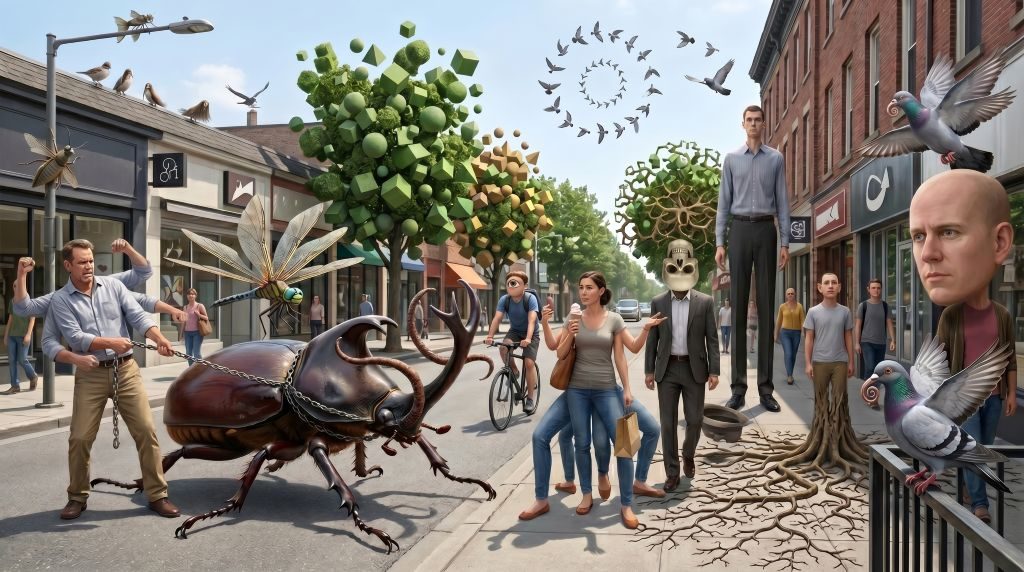
How did evolution avoid the
irrationality of unspecified margins?
Reality is in fact just the opposite:
a uniformity of constrained boundaries!
(See a far greater hurdle for orthodox evolution in the article:
'The Symphony Before the Composition')
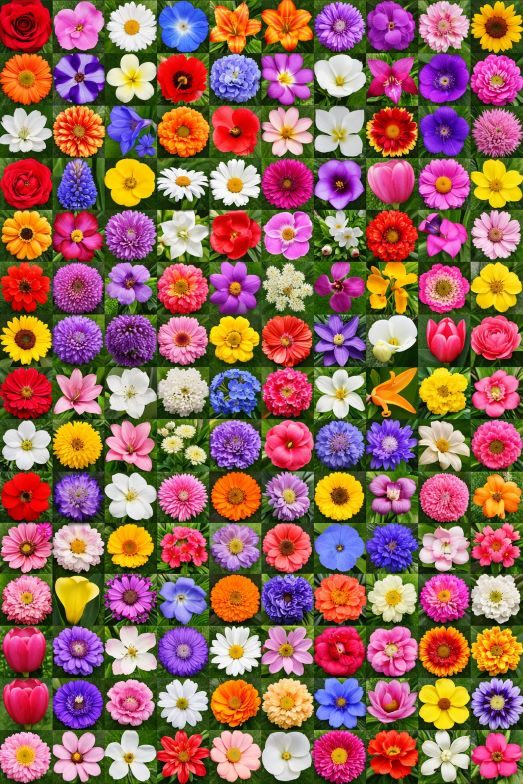
Flowers are arrayed with a disciplined beauty:
petals arranged in rotational symmetry,
sepals in ordered whorls,
stamens placed with architectural finesse.
