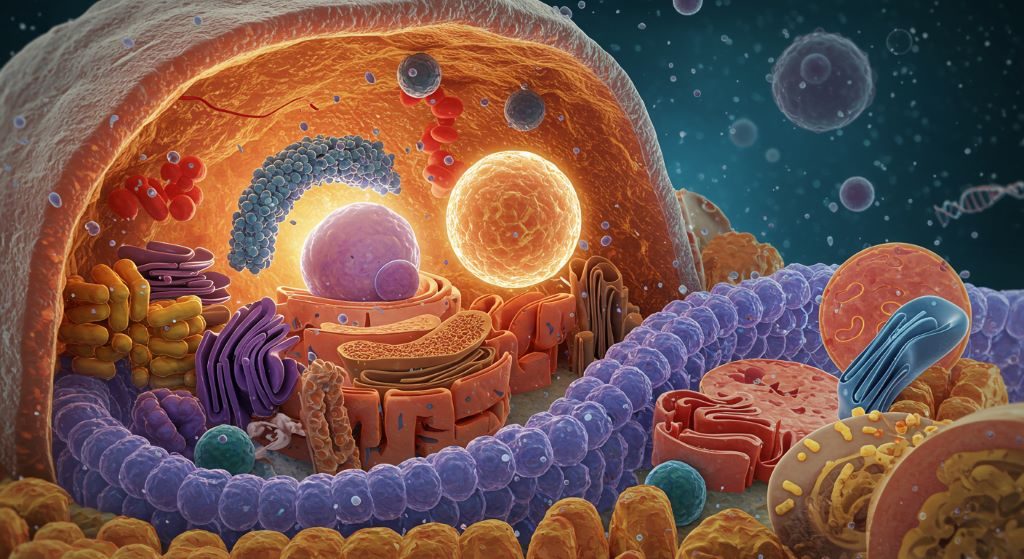
A Treatise on Evolutionary Protein-Developmental Vehicles
This article discusses ten principle biological vehicles included in evolutionary origin studies. The subjects discussed are:
- Natural Selection
- Exaptation (a re-purposed function)
- Evo-Devo (evolutionary biological development)
- Homologous (common) Genes
- Homologous (common) Structures
- Pseudogenes
- Horizontal Gene Transfer
- The Molecular Clock
- Gene Regulatory Networks
- Gene Recruitment
In the article 'The Symphony Before the Composition' the odds of proteins arising spontaneously is discussed at length. However, some believe that there are counter-arguments, evolutionary vehicles, that vastly reduce the odds.
The major evolutionary arguments that are used to support these views are discussed below. Each “vehicle” is examined under the light of empirical science.
(See also the paper specifically on the subject of co-option: "Borrowed" Systems: Broken Logic!)
Natural Selection
🧬 Why Natural Selection Seems Like Strong Evidence
Natural selection is presented as evolution's master craftsman — the force that sculpts complexity from simple beginnings. But this is a story told downstream of the real developmental complexity. Selection can only act on functional proteins, folding architectures, and regulatory networks whose origin it cannot effectively explain. It assumes the biochemical universe before claiming to refine it. Filtering is not creation. Sorting is not origin. Natural selection describes differential survival inside a system whose improbability remains untouched. It is a sieve placed beneath a symphony, not an explanation of how the instruments, the score, or the music came into being.
Evolutionists argue:
- Variation occurs.
- Natural selection filters the variation.
- Therefore, complexity can arise gradually.
- Therefore, natural selection explains biological innovation.
It sounds powerful — a sculptor shaping raw material.
But the article forces the upstream question:
Where does the raw material come from for this chain of events to even begin?
Natural selection does not answer this. It assumes it.
🧬 The Empirical Evidence
🧩 1. Natural selection presupposes the existence of functional proteins
Selection can only act after:
- functional proteins exist,
- folding architectures exist,
- transcription and translation machinery exist,
- regulatory networks exist.
The protein‑odds argumentation in the article 'The Symphony Before the Composition' shows that the odds of the spontaneous generation of any functional protein are astronomically improbable and in practical terms impossible.
Natural selection does not explain:
- how the first protein arose,
- how its folding code was established,
- how the cell knew it needed that protein.
Selection is a filter, not a generator.
🧩 2. Natural selection assumes the existence of the machinery that produces variation
Variation requires:
- DNA replication machinery,
- mutation‑repair enzymes,
- recombination systems,
- transcription factors,
- chromatin architecture.
Each of these is a complex protein system.
The article shows that the origin of these proteins is the real marvel.
Natural selection does not create variation machinery. It only acts on the variation produced by it.
🧩 3. Natural selection confuses differential survival with origin
Evolutionists often say:
- “Beneficial mutations spread.”
- “Harmful mutations are removed.”
- “Therefore, complexity evolves.”
But this is like saying:
- “Good cars sell well.”
- “Bad cars sell poorly.”
- “Therefore the car showroom makes the cars.”
Selection does not make the cars. It only sorts them.
The article 'The Symphony Before the Composition' indicates that the real question should be:
How were the biochemical "cars" manufactured and how did the original developmental method arise?
Natural selection does not provide the answer.
🧩 4. Natural selection presupposes the “catalogue problem”
The article's central question remains:
How does the cell know which proteins must exist and how to build them?
Natural selection does not explain:
- why the protein catalogue exists,
- why it is complete,
- why none of its essential proteins are missing,
- why its components are fully coordinated,
- why they collectively fulfil all of the cell’s functional requirements.
It only sorts variants of catalogue entries.
This is not origin — it is curation.
🧩 5. Natural selection assumes functional integration
For a mutation to be “selected,” it must:
- fold correctly,
- bind correctly,
- integrate into pathways,
- cooperate with other proteins,
- fit into developmental timing.
But each of these requirements depends on:
- protein‑protein interaction specificity,
- regulatory networks,
- cellular architecture.
The article shows that integration itself is a biochemical marvel.
Selection does not explain integration. It relies on it.
🧩 6. Natural selection is circular
The logic runs:
- Organisms vary.
- Some variations survive better.
- Therefore, evolution produced the variations.
- Therefore, natural selection proves evolution.
But this assumes:
- the existence of functional proteins,
- the existence of variation machinery,
- the existence of regulatory networks.
The article breaks the circle by asking:
How did the protein‑based machinery arise before any selection could act on it?
Natural selection does not provide the answer.
Exaptation (a re-purposed function)
🧬 Why Exaptation Seems Like Strong Evidence
Exaptation is an evolutionary biology term that describes a trait evolving to serve one specific function but is later repurposed to serve a completely different one. — (See also the article '"Borrowed" Systems: Broken Logic!' that deals with the argumentation on co-option. Note that Co-option and Exaptation are very similar; however Exaptation is about form, Co‑option is about function of underlying machinery.)
Exaptation only looks like a powerful evolutionary explanation if you quietly assume the existence of the very biochemical devices discussed in 'The Symphony Before the Composition' — the origin of proteins, folding architectures, and developmental systems.
Once those upstream improbabilities are foregrounded, exaptation becomes a story about repurposing parts of a system whose origin it cannot explain.
Evolutionists argue:
- A structure originally used for one purpose can later be co‑opted for another.
- Therefore, evolution can innovate without designing anything new.
- Therefore, complexity can arise by repurposing existing parts.
It sounds clever: “nature reuses what it already has.”
🧬 The Empirical Evidence
But this argument collapses once you ask the upstream question:
How did the proteins, folding architectures, and developmental blueprints for the original structure arise in the first place?
Exaptation does not answer this. It assumes it.
🧩 1. Exaptation presupposes the existence of fully functional proteins
Every “repurposed” structure — feather, bone, enzyme, limb, eye, valve — depends on:
- thousands of specialised proteins,
- precise folding architectures,
- coordinated gene‑expression programs,
- tissue‑specific signalling pathways.
The article shows that the odds of producing any functional protein architecture are astronomically low.
Exaptation does not explain:
- how these proteins arose,
- how their folding codes were established,
- how the cell acquired the catalogue of proteins needed for the original function.
It simply assumes the entire biochemical universe is already in place.
🧩 2. Exaptation assumes the developmental machinery before explaining repurposing
A structure cannot be repurposed unless:
- the developmental program that builds it already exists,
- the regulatory genes that coordinate it already exist,
- the tissue‑specific differentiation pathways already exist.
Exaptation does not explain the origin of this machinery. It only describes how existing machinery might be reused.
This is downstream variation, not upstream origin.
🧩 3. Exaptation confuses functional reinterpretation with functional creation
Evolutionists often say:
- feathers evolved for insulation, then were repurposed for flight;
- jaws evolved from gill arches;
- bones evolved from mineralised cartilage;
- enzymes evolved new catalytic roles.
But these claims assume:
- the proteins that build feathers already existed,
- the proteins that build jaws already existed,
- the proteins that build bones already existed,
- the proteins that enable catalytic specificity already existed.
Exaptation is not a mechanism for creating these proteins. It is a story about reusing them.
The article shows that the real miracle is not repurposing — it is origin.
🧩 4. Exaptation presupposes the “catalogue problem”
The article's central question:
How does the cell know which proteins must exist?
Every exapted structure depends on:
- a precise catalogue of protein types,
- none missing,
- none redundant,
- none optional.
Exaptation does not explain the origin of this catalogue. It only shows how the catalogue can be rearranged.
This is not explanation — it is choreography on top of a miracle.
🧩 5. Exaptation assumes the existence of regulatory networks
For a structure to be repurposed, regulatory networks must:
- redirect developmental timing,
- alter tissue placement,
- modify signalling pathways,
- integrate the new function into the organism's physiology.
But each regulatory gene:
- requires its own protein architecture,
- requires its own folding code,
- requires its own binding specificity.
The article shows that the odds of producing any such protein are astronomically low.
Exaptation does not explain the origin of regulatory networks. It only explains how they can be used once they exist.
🧩 6. Exaptation is circular
The logic runs:
- A structure exists.
- It is repurposed.
- Therefore, evolution produced the structure.
- Therefore, repurposing proves evolution.
But this assumes:
- the existence of the structure,
- the existence of the proteins that build it,
- the existence of the developmental machinery.
These are precisely the things exaptation cannot explain.
The article breaks the circle by asking:
How did the protein‑based machinery arise before any repurposing was possible?
The exaptation argumentation does not provide an effective answer.
Evo-Devo (evolutionary biological development)
🧬 Why Evo‑Devo Seems Like Strong Evidence
Evo‑Devo is often presented as evolution's master key, the elegant mechanism by which small genetic tweaks generate vast anatomical change. But this is a story told downstream of the real miracle. Every developmental pathway — every morphogen gradient, every regulatory switch, every tissue‑specific signal — depends on thousands of specialised proteins whose origin Evo‑Devo does not and cannot explain. It assumes the biochemical universe before claiming to rearrange it. Tweaking a regulatory gene is not the same as creating the proteins, folding architectures, and developmental blueprints that make regulation possible. Evo‑Devo describes variation within a system whose improbability remains untouched. It is choreography, not creation; modulation, not origin; a rearrangement of the symphony, not an explanation of how the instruments, the score, or the orchestra came into being.
Evolutionists argue:
- Small changes in developmental genes can produce large anatomical differences.
- Therefore, evolution can generate complexity by tweaking regulatory switches.
- Therefore, Evo‑Devo explains the origin of new forms.
It sounds elegant: “change the timing, change the body plan.”
But this argument only works if you ignore the upstream biochemical realities the article highlights.
🧬 The Empirical Evidence
🧩 1. Evo‑Devo assumes the existence of the proteins that make development possible
Developmental genes do not create structures directly. They coordinate the use of:
- thousands of specialised proteins,
- precise folding architectures,
- cell‑type‑specific enzymes,
- signalling molecules,
- structural scaffolds.
The article shows that the odds of producing any functional protein architecture are astronomically low.
Evo‑Devo does not explain:
- how these proteins arose,
- how their folding codes were established,
- how the cell acquired the catalogue of proteins needed for development.
It simply assumes the entire biochemical universe is already in place.
🧩 2. Evo‑Devo assumes the developmental program before explaining variation
Development requires:
- morphogen gradients,
- gene‑regulatory networks,
- timed cell migrations,
- tissue‑specific differentiation pathways,
- organ‑level integration.
Evo‑Devo does not explain how this choreography originated. It only describes how existing choreography can be tweaked.
This is downstream variation, not upstream origin.
🧩 3. Evo‑Devo confuses modulation with direct creation
Evo‑Devo shows that:
- altering a regulatory gene can change limb length,
- shifting a timing gene can change segmentation,
- modifying a signalling pathway can change organ placement.
But these are modulations of an already‑functional system.
They do not explain:
- how the limb‑building proteins arose,
- how segmentation machinery originated,
- how organ‑placement logic was encoded.
Evo‑Devo is like adjusting the dimmer switch on a lamp — it does not explain how the lamp was built.
🧩 4. Evo‑Devo presupposes the “catalogue problem”
The article's central question:
How does the cell know which proteins must exist?
Every developmental pathway depends on:
- a precise catalogue of protein types,
- none missing,
- none redundant,
- none optional.
Evo‑Devo does not explain the origin of this catalogue. It only shows how the catalogue can be rearranged.
This is not explanation — it is choreography on top of a miracle.
🧩 5. Evo‑Devo assumes the existence of regulatory genes
Regulatory genes (Hox genes, Pax genes, etc.) are often presented as evolution's master switches.
But each regulatory gene:
- requires its own protein architecture,
- requires its own folding code,
- requires its own binding specificity,
- requires its own integration into the genome's logic.
The article shows that the odds of producing any such protein are astronomically low.
Evo‑Devo does not explain the origin of regulatory genes. It only explains how they can be used once they exist.
🧩 6. Evo‑Devo is circular
The logic runs:
- Developmental genes control body plans.
- Changing these genes changes body plans.
- Therefore, evolution produced body plans.
- Therefore, Evo‑Devo proves evolution.
But this assumes:
- the existence of developmental genes,
- the existence of the proteins they regulate,
- the existence of the developmental machinery.
These are precisely the things Evo‑Devo cannot explain.
The article breaks the circle by asking:
How did the protein‑based developmental machinery arise before any Evo‑Devo variation was possible?
The Evo‑Devo argumentation has no answer.
Homologous (common) Genes
🧬 Why Homologous Genes Seem to be Strong Evidence
Evolutionists point to homologous genes (that share common “familial” attributes) as if similarity were an explanation, but homology only describes patterns inside a system whose existence it cannot justify.
The real miracle lies upstream: the protein‑folding architecture, the translation machinery, the catalytic choreography, the entire cellular catalogue of required proteins. Homology assumes all of this already exists — the argument assumes the symphony before the composition — and then claims validity because the melodies resemble each other. But similarity within an already‑functioning biochemical universe is not evidence of its origin; it is simply the inevitable signature of shared constraints. Homologous genes are downstream echoes of a system whose improbability remains untouched. They explain nothing about how the first protein was specified, folded, stabilised, integrated, or even imagined by the cell. They are the shadows of a structure, not the cause of it.
Here is a breakdown of the problems with the evolution narratives.
Evolutionists argue:
- Many organisms share similar genes (homologous genes).
- Therefore, these genes must have been inherited from a common ancestor.
- Therefore, evolution explains the origin of biological complexity.
This argument rests on two pillars:
- Sequence similarity (genes look alike across species).
- Functional conservation (they often produce similar proteins).
From the outside, this looks like a clean, tidy story.
But the article on protein odds exposes the hidden assumptions that make this argument circular.
🧬 The Empirical Evidence
🧩 1. Homology assumes the prior existence of functional proteins
Homologous genes are only meaningful after a functional protein already exists. But the article shows that:
- The probability of randomly assembling a functional protein is astronomically low.
- The folding architecture must be correct from the start.
- The machinery that reads, transcribes, and translates the gene must already be in place.
- The cell must already “know” the protein's role in its molecular economy.
Homology does not explain any of this. It simply says: “Once the protein exists, similar versions appear in different organisms.”
That is not an origin story. It is an observation after the fact.
🧩 2. Homology does not explain the origin of the gene itself
Homology tells you nothing about:
- how the first gene arose,
- how the first protein architecture was specified,
- how the folding code was established,
- how the translation machinery was coordinated,
- how the cell's catalogue of required proteins came into being.
It only says:
“This gene looks like that gene.”
But similarity is not causation. Similarity is not mechanism. Similarity is not explanation.
🧩 3. Homology assumes that similarity = descent
Evolutionary literature stresses that homology is defined by shared ancestry, not merely similarity. But this is a definitional move, not a demonstrated mechanism. As the source notes:
Homology is a statement about shared lineage, distinct from mere sequence similarity.
But this is precisely the point: The conclusion (shared lineage) is built into the definition. It is not discovered; it is assumed.
The article's argument about protein odds shows that the real question is not whether two genes look alike, but:
How did any gene capable of producing a functional protein arise at all?
Homology does not touch this question.
🧩 4. Homology presupposes the universal molecular machinery
Evolutionists often argue that the universal genetic code proves common descent. The AP Biology source states:
All organisms use the same genetic code and molecular machinery, proving they inherited these systems from a common ancestor.
But the article flips this:
- The universal machinery is itself a staggering improbability.
- The protein‑folding architecture is a staggering improbability.
- The coordinated catalogue of 100,000+ protein types is a staggering improbability.
Homology does not explain the origin of this machinery. It merely assumes it.
Thus the argument becomes:
- The machinery exists.
- Therefore, similar genes must have been inherited.
- Therefore, the machinery must have evolved.
This is circular.
🧩 5. Homology cannot distinguish design constraints from descent
If all organisms must use:
- the same 20 amino acids,
- the same ribosomal decoding system,
- the same folding physics,
- the same biochemical constraints,
then similarity is inevitable, regardless of ancestry.
In engineering terms: If every builder must use the same materials and the same physics, their blueprints will resemble each other — not because they inherited them, but because the constraints force similarity.
Homology does not separate:
- constraint‑driven similarity from
- ancestry‑driven similarity.
It simply assumes the latter.
🧩 6. Homology does not address the “catalogue problem”
The article's central question:
How does the cell know which proteins must exist?
Homology cannot answer this. It only says:
“These genes look like they came from the same place.”
But the deeper issue is:
- Why does the genome contain the exact set of protein specifications needed for life?
- Why are none missing?
- Why are none redundant?
- Why are none optional?
Homology does not explain the origin of the catalogue. It only describes similarities within the catalogue.
🧩 7. Homology is downstream evidence, not upstream mechanism
Homology is a pattern, not a process. It is a result, not a cause. It is post‑origin, not origin‑explaining.
The article deals with the upstream problem: How did the protein‑coding system come into existence at all?
Homology deals with the downstream observation: Once the system exists, similar genes appear across species.
These are not equivalent.
🧬 Final Synthesis
Homologous genes only appear to support evolution because the argument quietly assumes:
- the existence of functional proteins,
- the existence of folding architectures,
- the existence of translation machinery,
- the existence of a complete protein catalogue,
- the existence of coordinated cellular systems.
But these are precisely the things the article shows to be astronomically improbable without foresight, coordination, and mechanism.
Thus:
Homology explains variation within an already‑functioning system. It does not explain the origin of the system itself.
And once the origin problem is foregrounded, homology ceases to be strong evidence — it becomes a description of similarity, not a demonstration of mechanism.
Homologous (common) Structures
🧬 Similarity is Not Evidence of Origin
Homology assumes this biochemical universe already exists, then claims validity because the final shapes resemble each other. But similarity within a constrained system is not a description of its origin; it is the predictable outcome of shared physics, shared materials, and shared molecular machinery, akin to the balanced “margins” discussed in the article 'The Margins Effect — a Puzzle for Evolutionary Narratives'). Homologous structures are downstream echoes of a system whose upstream improbability remains untouched. They explain nothing about how the proteins, tissues, and developmental blueprints came into being. They are the shadows of a structure, not the cause of it.
🧬 Why Homologous Structures Seem Convincing
Evolutionists argue:
- Different organisms share similar anatomical structures.
- Therefore, these structures must have evolved from a common ancestor.
- Therefore, evolution explains their origin.
This is tidy, visual, and rhetorically interesting — until you ask the upstream question:
How did the proteins, tissues, and developmental blueprints for these structures arise at all?
Homology does not answer this. It presupposes its existence.
🧬 The Empirical Evidence
🧩 1. Homologous structures presuppose the existence of the proteins that build them
Every anatomical structure — limb, wing, fin, jaw, vertebra — is built from:
- thousands of specialised proteins,
- precise folding architectures,
- coordinated gene‑expression programs,
- tissue‑specific signalling pathways,
- developmental timing mechanisms.
The article shows that the odds of producing any functional protein architecture are astronomically low.
Homology does not explain:
- how the proteins arose,
- how the folding code was established,
- how the developmental choreography was coordinated.
It simply says:
“These structures look alike.”
But likeness is not origin.
🧩 2. Homology assumes the developmental program already exists
A “homologous limb” is not just bone shape — it is:
- a coordinated embryonic blueprint,
- gradients of morphogens,
- timed cell migrations,
- cartilage templates,
- vascular routing,
- nerve patterning,
- muscle attachment logic.
Homology does not explain how this choreography came into being. It merely assumes the entire developmental machinery is already in place.
The article's protein‑odds argument shows that this machinery is the real miracle — not the superficial similarity of the final structure.
🧩 3. Homology confuses constraint with ancestry
If all organisms must obey:
- the same physics,
- the same biomechanics,
- the same protein‑folding rules,
- the same cellular signalling constraints,
then similar structures are inevitable, regardless of ancestry.
Engineers using the same materials and same physics will produce similar designs — not because they inherited them, but because the constraints force similarity.
Homology cannot distinguish:
- constraint‑driven similarity from
- ancestry‑driven similarity.
It simply assumes the latter.
🧩 4. Homology is downstream pattern, not upstream mechanism
Homology describes:
- the shape of a bone,
- the layout of a limb,
- the pattern of a structure.
But the article deals with:
- the origin of the proteins that build the bone,
- the origin of the folding architecture,
- the origin of the gene‑regulatory networks,
- the origin of the developmental program.
Homology is downstream. Protein odds are upstream.
Downstream similarity cannot explain upstream origin.
🧩 5. Homology assumes the “catalogue problem” is solved
The central question here is:
How does the cell know which proteins must exist?
Every homologous structure depends on:
- a precise catalogue of protein types,
- none missing,
- none redundant,
- none optional.
Homology does not explain the origin of this catalogue. It only notes that similar developments produce similar structures.
This is an observation — not an explanation.
🧩 6. Homology is circular
The logic runs:
- These structures look similar.
- Therefore, they share ancestry.
- Therefore, evolution produced them.
- Therefore, similarity proves evolution.
But the conclusion (shared ancestry) is built into the definition of homology itself. It is not demonstrated — it is assumed.
We must therefore ask the forbidden question:
How did the proteins, folding architectures, and developmental systems arise before any structure could even be referred to as homologous? What is the origin of the structures themselves?
The evolutionary homology argument has no answer.
Pseudogenes
🧬 Why Pseudogenes Seem Like Strong Evidence
Pseudogenes (segments of DNA that look like real genes but cannot make proteins) only look like strong evolutionary evidence on the surface. However, a careful analysis reveals something quite different.
Pseudogenes are often presented as genomic fossils — broken gene copies that supposedly trace the path of evolution. But this argument only operates downstream of the real miracle. Every pseudogene presupposes the prior existence of a functional gene, a folding architecture, a regulatory network, and a fully operational transcription‑translation system. Pseudogenes describe decay within a system whose origin they cannot touch. They assume the symphony before claiming to find scratches on the score. Their existence tells us nothing about how the proteins, the machinery, or the developmental logic came into being. Pseudogenes are artefacts inside a biochemical universe whose improbability remains untouched. They are the shadows of a structure, not the cause of it.
Evolutionists argue:
- Pseudogenes are “broken” copies of functional genes.
- Their shared patterns across species imply shared ancestry.
- Therefore, pseudogenes are genomic fossils proving evolution.
Recent literature reinforces this narrative, describing pseudogenes as products of genomic evolution and neutral drift, sometimes later gaining regulatory roles or even being reactivated.
But this argument only works if you ignore the upstream biochemical realities the article highlights.
🧬 The Empirical Evidence
🧩 1. Pseudogenes presuppose the existence of functional genes
A pseudogene is, by definition, a copy of a functional gene that has lost coding capacity. But the article shows that the odds of producing any functional protein architecture are astronomically low.
Thus the real question is:
How did the original functional gene arise at all?
Evolutionists use pseudogenes as evidence after the marvel, not for the marvel.
Pseudogenes do not explain:
- how the original protein's folding architecture was specified,
- how the translation machinery knew how to build it,
- how the cell's protein catalogue was established.
They simply assume the entire biochemical universe is already in place.
🧩 2. Pseudogenes assume the existence of regulatory networks
Many pseudogenes are not inert; they participate in regulatory processes, influence transcription, or even contribute to organ identity.
But each regulatory role requires:
- binding‑specific proteins,
- transcription factors,
- RNA‑processing machinery,
- developmental timing systems.
The article shows that the origin of these proteins is the real improbability.
Pseudogenes do not explain the origin of regulatory networks. They merely show that once the networks exist, they can interact with broken gene copies.
🧩 3. Pseudogenes confuse downstream decay with upstream origin
Evolutionists argue:
“Because pseudogenes look like broken versions of functional genes, they must be remnants of evolutionary history.”
But this is a downstream phenomenon. Decay is not origin. Breakage is not creation.
The article focuses on the upstream miracle:
- the origin of functional proteins,
- the origin of folding architectures,
- the origin of developmental blueprints.
Pseudogenes only describe what happens after these miracles exist.
🧩 4. Pseudogenes assume the “catalogue problem” is solved
The article's central question:
How does the cell know which proteins must exist?
The genome contains a precise catalogue of protein‑coding genes. Pseudogenes are copies or variants of items in that catalogue.
But pseudogenes do not explain:
- why the catalogue exists,
- why it is complete,
- why it is coordinated,
- why none of its essential proteins are missing.
They only show that once the catalogue exists, some entries can be duplicated or disabled.
This is not origin — it is entropy.
🧩 5. Pseudogenes assume the existence of transcriptional machinery
Recent studies show that many pseudogenes are transcribed, some even translated, contributing to development and disease.
But transcription and translation require:
- RNA polymerases,
- ribosomes,
- tRNAs,
- chaperones,
- folding enzymes.
The article shows that the origin of this machinery is the real miracle.
Pseudogenes do not explain how the machinery arose. They only show that once the machinery exists, it can process defective gene copies.
🧩 6. Pseudogenes are circular evidence
The logic runs:
- Pseudogenes resemble functional genes.
- Therefore, they are remnants of evolutionary history.
- Therefore, evolution produced the functional genes.
- Therefore, pseudogenes prove evolution.
But the conclusion (evolution produced the functional genes) is built into the interpretation of pseudogenes themselves.
The article breaks the circle by asking:
How did the functional genes arise before any pseudogene could exist?
Evolutionary narratives have no satisfactory answer.
Horizontal Gene Transfer
🧬 Why Horizontal Gene Transfer Seems Like Strong Evidence
Horizontal gene transfer (the movement of genetic material between organisms other than by parent-to-offspring reproduction) is often presented as evolution's shortcut — a way for organisms to acquire new traits without inventing them. But this argument only operates downstream of the real phenomena. Every transferred gene presupposes the prior existence of a functional protein, a folding architecture, and a fully operational transcription‑translation system.
Horizontal gene transfer (HGT) does not explain how these proteins or their machinery came into being; it merely moves them around. It assumes the symphony before even claiming to rearrange the instruments. Redistribution is not origin. Compatibility is not initial development. Horizontal gene transfer describes traffic inside a biochemical universe whose improbability remains untouched. It is movement, not mechanism; transfer, not genesis; a reshuffling of the score, not an explanation of how the orchestra, the instruments, or the music came to exist.
Evolutionists argue:
- Genes can move between unrelated organisms.
- These transferred genes can confer new traits.
- Therefore, evolution can innovate rapidly without designing anything new.
- Therefore, HGT explains major evolutionary transitions.
This sounds powerful — a shortcut for complexity. But the argument collapses once you ask the upstream question:
How did the proteins, folding architectures, and cellular machinery arise before any gene could be transferred?
HGT does not answer this. It assumes it.
🧬 The Empirical Evidence
🧩 1. HGT presupposes the existence of functional genes
Every transferred gene is:
- already functional,
- already folded correctly,
- already integrated into a biochemical system,
- already part of a protein catalogue.
The article shows that the odds of producing any functional protein architecture are astronomically low.
HGT does not explain:
- how the original gene arose,
- how its protein's folding code was established,
- how the cell knew it needed that protein.
It simply moves the miracle from one organism to another.
🧩 2. HGT assumes the existence of the machinery required to use the transferred gene
For a transferred gene to function, the recipient organism must already possess:
- ribosomes,
- tRNAs,
- chaperones,
- transcription factors,
- regulatory networks,
- protein‑folding machinery.
Sources confirm HGT occurs across all domains of life and can introduce new metabolic pathways or virulence factors — but these pathways require complex protein systems that HGT does not explain.
The article shows that the origin of this machinery is the real improbability.
HGT does not create machinery. It only assumes it.
🧩 3. HGT confuses acquisition with origin
Evolutionists often say:
- bacteria acquire antibiotic resistance via HGT,
- microbes gain new metabolic pathways,
- eukaryotes occasionally acquire foreign genes.
But these are acquisitions, not origins.
HGT does not explain:
- how the antibiotic‑resistance protein arose,
- how the metabolic enzyme was specified,
- how the folding architecture was encoded.
It only explains how an organism can receive a protein specification — not how the specification came into existence.
🧩 4. HGT presupposes the “catalogue problem”
The central question is:
How does the cell know which proteins must exist?
HGT does not explain:
- why the protein catalogue exists,
- why it is complete,
- why it is coordinated,
- why none of its essential proteins are missing.
It only shows that once the catalogue exists, some entries can be transferred horizontally.
This is not origin — it is redistribution.
🧩 5. HGT assumes compatibility between donor and recipient systems
For a transferred gene to function, the recipient must:
- recognise the gene's promoters,
- integrate it into regulatory networks,
- fold its protein correctly,
- supply the correct cofactors,
- route the protein to the correct cellular location.
Sources confirm HGT occurs even in eukaryotes — but they do not explain how such compatibility arose.
The article shows that compatibility itself is a biochemical miracle.
HGT does not explain compatibility. It relies on it.
🧩 6. HGT is circular
The logic runs:
- Genes move between organisms.
- Therefore, evolution produced the genes.
- Therefore, HGT proves evolution.
- Therefore, transferred genes are evidence of evolutionary innovation.
But this assumes:
- the existence of the genes,
- the existence of the proteins they encode,
- the existence of the machinery that uses them.
This article breaks the circle by asking:
How did the protein‑based machinery arise before any gene could even begin to be transferred?
Horizontal Gene Transfer does not provide a satisfactory answer.
The Molecular Clock
🧬 Why the Molecular Clock Seems Like Strong Evidence
The molecular clock is presented as evolution's stopwatch — a precise, mathematical tool that confirms deep time and common descent. But this argument only operates downstream of the real development origins. A clock can only tick inside a system already equipped with functional proteins, folding architectures, replication machinery, and mutation‑repair enzymes. The molecular clock does not explain how these systems came into being; it merely measures variation within them. It assumes the symphony before claiming to explain the timing of the movements. Chronology is not origin. Rate measurement is not mechanism. The molecular clock describes tempo inside a biochemical universe whose improbability remains untouched. It is timing, not creation; calibration, not causation; a metronome placed on a stage it cannot explain.
Evolutionists argue:
- Mutations accumulate at roughly constant rates.
- Therefore, genetic differences can be used to estimate divergence times.
- Therefore, the molecular clock confirms evolutionary history.
It sounds mathematical, objective, even physics‑like.
But the argument collapses once you ask the upstream question 'The Symphony Before the Composition' forces:
How did the proteins, folding architectures, and mutation‑repair machinery arise before any “clock” could tick?
The molecular clock does not answer this. It assumes it.
🧬 The Empirical Evidence
🧩 1. The molecular clock presupposes the existence of functional proteins
A “clock” can only tick after:
- functional proteins exist,
- DNA replication machinery exists,
- mutation‑repair systems exist,
- transcription and translation systems exist.
The article shows that the odds of producing any functional protein architecture are astronomically low.
The molecular clock does not explain:
- how the first protein arose,
- how the folding code was established,
- how the cell's protein catalogue was assembled.
It simply measures variation after the miracle.
🧩 2. The molecular clock assumes the existence of mutation‑repair machinery
Mutation rates are not natural constants. They depend on:
- proofreading enzymes,
- mismatch‑repair proteins,
- DNA polymerase fidelity,
- cell‑cycle checkpoints.
Each of these is a complex protein system.
The article shows that the origin of these proteins is the real improbability.
The molecular clock does not explain how mutation‑repair machinery arose. It only assumes it.
🧩 3. The molecular clock confuses rate measurement with origin explanation
Evolutionists often say:
- “We can measure mutation rates.”
- “We can estimate divergence times.”
- “Therefore, evolution produced the divergence.”
But measuring a rate does not explain the origin of the system that exhibits the rate.
It is like timing the decay of a radioactive isotope without explaining how the atom was formed.
The molecular clock is chronology, not causation.
🧩 4. The molecular clock presupposes the “catalogue problem”
The article's central question:
How does the cell know which proteins must exist?
The molecular clock does not explain:
- why the protein catalogue exists,
- why it is complete,
- why none of its essential proteins are missing.
It only measures how fast the catalogue accumulates changes.
This is not origin — it is bookkeeping.
🧩 5. The molecular clock assumes stable biochemical conditions
For a molecular clock to function, mutation rates must be:
- stable,
- predictable,
- governed by existing protein machinery.
But mutation rates vary dramatically across:
- species,
- tissues,
- environments,
- genomic regions.
Even evolutionary literature acknowledges that molecular clocks often disagree, require calibration, and produce contradictory timelines.
The article shows that the stability required for a clock is itself a biochemical miracle.
The clock does not explain stability. It relies on it.
🧩 6. The molecular clock is circular
The logic runs:
- Mutation rates appear constant.
- Therefore, divergence times can be estimated.
- Therefore, evolution produced the divergence.
- Therefore, the clock proves evolution.
But this assumes:
- the existence of functional genes,
- the existence of mutation‑repair machinery,
- the existence of the protein‑based systems that govern mutation rates.
We must ask:
How did the protein‑based machinery arise before any molecular clock could tick?
The molecular clock argumentation does not provide the answer.
Gene Regulatory Networks
🧬 Why Gene Regulatory Networks Seem Like Strong Evidence
Gene regulatory networks (GRNs = molecular devices that interact with each other and other substances in a cell to control gene expression levels) are presented as evolution's master control panels — intricate circuits that supposedly explain how small genetic tweaks generate vast biological complexity. But this is a story told downstream of the real development work.
Every node, switch, and pathway in a GRN depends on thousands of specialised proteins whose origin the network does not and cannot explain. GRNs assume the biochemical universe before claiming to orchestrate it. Coordination is not creation. Regulation is not origin. A GRN can only conduct a symphony whose instruments, score, and musicians already exist. Gene regulatory networks describe the choreography inside a system whose improbability remains untouched. They are maps of the performance, not explanations of how the stage, the orchestra, or the music came into being.
Evolutionists argue:
- GRNs coordinate development.
- Small changes in GRNs can produce large anatomical differences.
- Therefore, GRNs explain how evolution generates complexity.
It sounds elegant: “tweak the network, change the organism.”
🧬 The Empirical Evidence
But this argument collapses once you ask the upstream question the article forces:
How did the proteins, folding architectures, and developmental machinery arise before any network could regulate them?
GRNs do not answer this. They assume it.
🧩 1. GRNs presuppose the existence of functional proteins
A regulatory network is not a creator — it is a traffic controller. It can only coordinate what already exists.
Every node in a GRN depends on:
- transcription factors (proteins),
- signalling molecules (proteins),
- chromatin remodelers (proteins),
- enhancers and repressors (protein‑binding sites),
- developmental enzymes (proteins).
The article shows that the odds of producing any functional protein architecture are astronomically low.
GRNs do not explain:
- how these proteins arose,
- how their folding codes were established,
- how the cell knew it needed them.
GRNs assume the orchestra before claiming to conduct it.
🧩 2. GRNs assume the existence of the developmental machinery
A GRN can only “regulate” development if:
- morphogen gradients already exist,
- cell‑type differentiation pathways already exist,
- tissue‑specific signalling systems already exist,
- organ‑level integration already exists.
GRNs do not explain the origin of this machinery. They merely describe how existing machinery is coordinated.
This is downstream choreography, not upstream creation.
🧩 3. GRNs confuse coordination with origin
Evolutionists often say:
- “Change a regulatory gene, change a body plan.”
- “Modify a network, modify development.”
- “GRNs show how evolution builds complexity.”
But this is like saying:
- “Change the conductor's gestures, change the performance.”
True — but irrelevant to the question:
Where did the instruments, the score, and the musicians come from?
GRNs do not create proteins. They do not create folding architectures. They do not create developmental blueprints.
They only coordinate what already exists.
🧩 4. GRNs presuppose the “catalogue problem”
The article's central question:
How does the cell know which proteins must exist?
GRNs do not explain:
- why the protein catalogue exists,
- why it is complete,
- why none of its essential proteins are missing,
- why its components are perfectly coordinated.
They only show that once the catalogue exists, it can be switched on and off in complex patterns.
This is not origin — it is scheduling.
🧩 5. GRNs assume the existence of regulatory proteins
Every regulatory gene in a GRN encodes a protein that must:
- fold correctly,
- bind specific DNA motifs,
- interact with other proteins,
- respond to signalling pathways,
- integrate into developmental timing.
The article shows that the odds of producing any such protein are astronomically low.
GRNs do not explain the origin of regulatory proteins. They only explain how they can be used once they exist.
🧩 6. GRNs are circular
The logic runs:
- GRNs coordinate development.
- Changing GRNs changes development.
- Therefore, evolution produced development.
- Therefore, GRNs prove evolution.
But this assumes:
- the existence of developmental machinery,
- the existence of regulatory proteins,
- the existence of the protein catalogue.
The article breaks the circle by asking:
How did the protein‑based machinery arise before any GRN could regulate it?
Gene Regulatory Networks do not provide a satisfactory answer.
Gene Recruitment
🧬 Why These Mechanisms Seem Convincing
Gene recruitment, sub‑functionalisation, and neo‑functionalisation are often presented as evolution's creative toolkit — clever ways to repurpose, divide, or reinvent genetic functions. But each mechanism operates downstream of the real developmental work. Every recruited or duplicated gene presupposes the prior existence of a functional protein, a stable folding architecture, and a fully integrated regulatory environment.
These mechanisms do not explain how any of this came into being; they merely rearrange what already exists. Repurposing is not origin. Partitioning is not creation. Modification is not explanation. These processes describe variations inside a biochemical universe whose improbability remains untouched. They are edits to the score, not accounts of how the instruments, the orchestra, or the music came to exist.
Evolutionists argue:
- Gene recruitment: an existing gene is co‑opted for a new role.
- Sub‑functionalisation: duplicated genes divide the original function between them.
- Neo‑functionalisation: duplicated genes evolve entirely new functions.
Together, these are presented as evolution's creative engine — a way to innovate without inventing anything from scratch.
🧬 The Empirical Evidence
But the article forces the upstream question:
How did the proteins, folding architectures, and cellular machinery arise before any gene could be recruited, divided, or repurposed?
These mechanisms do not answer this. They assume it.
🧩 1. All three mechanisms presuppose the existence of functional proteins
Every recruited or duplicated gene already encodes:
- a functional protein,
- with a precise folding architecture,
- with correct binding specificity,
- integrated into cellular pathways.
Your Manifesto shows that the odds of producing any functional protein architecture are astronomically low.
These mechanisms do not explain:
- how the original protein arose,
- how its folding code was established,
- how the cell knew it needed that protein.
They simply rearrange the miracle.
🧩 2. Gene recruitment assumes pre‑existing biochemical compatibility
For a gene to be “recruited” into a new role, the protein must already:
- fold correctly,
- bind to new partners,
- operate in new tissues,
- integrate into new regulatory networks.
But each of these requirements depends on:
- protein‑protein interaction specificity,
- tissue‑specific expression machinery,
- developmental timing systems.
The article shows that compatibility itself is a biochemical marvel.
Recruitment does not explain compatibility. It relies on it.
🧩 3. Sub‑functionalisation assumes the original protein's complexity
When a gene duplicates and each copy takes on part of the original function, evolutionists claim this explains diversification.
But sub‑functionalisation presupposes:
- the original protein's full complexity,
- the original regulatory logic,
- the original folding architecture.
It does not explain how the original protein arose. It only explains how its function can be split.
This is not origin — it is partitioning.
🧩 4. Neo‑functionalisation assumes the existence of a functional starting point
Neo‑functionalisation is often presented as evolution's most creative mechanism: a duplicated gene evolves a new function.
But this requires:
- a functional protein scaffold,
- a stable folding architecture,
- a pre‑existing regulatory context,
- a biochemical environment capable of supporting the new function.
The article shows that the origin of the scaffold is the real miracle.
Neo‑functionalisation does not create scaffolds. It only modifies them.
🧩 5. All three mechanisms presuppose the “catalogue problem”
The article's central question:
How does the cell know which proteins must exist?
These mechanisms do not explain:
- why the protein catalogue exists,
- why it is complete,
- why none of its essential proteins are missing,
- why its components are perfectly coordinated.
They only show how the catalogue can be rearranged once it exists.
This is not origin — it is editing.
🧩 6. All three mechanisms assume the existence of regulatory networks
Recruitment, sub‑functionalisation, and neo‑functionalisation all require:
- promoters,
- enhancers,
- transcription factors,
- chromatin architecture,
- developmental timing.
But each regulatory protein:
- requires its own folding architecture,
- requires its own binding specificity,
- requires its own integration into cellular logic.
The article shows that the origin of regulatory proteins is the real improbability.
These mechanisms do not explain regulatory origins. They only describe regulatory reuse.
🧩 7. All three mechanisms are circular
The logic runs:
- Genes can be repurposed or divided.
- Therefore, evolution produced the original genes.
- Therefore, these mechanisms prove evolution.
- Therefore, gene diversification explains complexity.
But this assumes:
- the existence of the original gene,
- the existence of the protein it encodes,
- the existence of the machinery that uses it.
The article breaks the circle by asking:
How did the protein‑based machinery arise before any recruitment or diversification was possible?
These mechanisms have no answer.