

SUNDAY
23 August 2026
"Empirical science
unravels the
wool that
covers the eyes!"
🍹2-minute Sample: Best With a Warm Companion Drink
🧬 Reflecting on Reflexes: Autonomic Intelligence

“You carry around one of the most sophisticated machines ever assembled… your body is monitoring, adjusting, repairing, and reinventing itself on a scale that would put any man‑made system to shame.”
— Discover Wild Science.
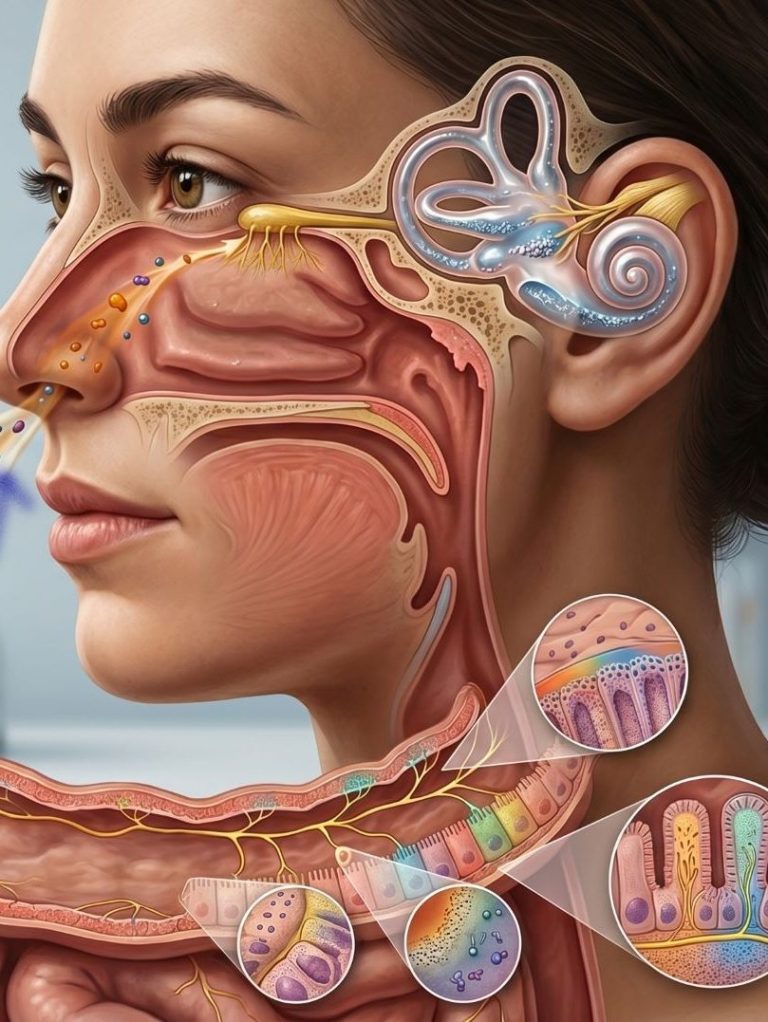
The reflex arc is not
the evolutionary piecemeal patchwork
— it's a circuit.
It requires sensors, processors, effectors.
Did evolution really specify these
fine-tuned instruments?
How ... ?
Evolution does not
plan, predict, or design.
🤔 The Pulse that's Faster than Thought
Before we speak, before we think, before we choose — our bodies are already responding. The pupils contract. The heart adjusts. The gut prepares.
These are autonomic reflexes: silent, swift, and superbly calibrated. They do not wait for deliberation. They do not evolve mid-crisis. They are built-in, pre-emptive, and purposeful.
And they pose a problem …
… Not for our physiology, but for the reigning orthodoxy of natural selection, which insists that complexity arises through blind iteration, that purpose is an illusion, and that intelligence is a retrospective label for accidental survival.
But what if we were to reflect further on the reflex system?
🧠 The Architecture of Autonomic Reflexes
The autonomic nervous system governs involuntary functions — heart rate, digestion, respiration, pupil dilation, sexual responses, and more. It operates through two branches:
- Sympathetic Nervous System: Mobilises energy, initiates fight-or-flight responses.
- Parasympathetic Nervous System: Conserves energy, promotes rest-and-digest functions.
These systems coordinate through reflex arcs — neural circuits that bypass conscious thought. A stimulus (e.g. blood pressure spike) activates receptors (baroreceptors), which send signals to the brainstem. The brainstem adjusts heart rate and vessel diameter, restoring equilibrium in milliseconds.
Key autonomic reflexes include:
- Baroreceptor Reflex: Maintains blood pressure via heart rate and vasodilation (widening of the blood vessels).
- Pupillary Light Reflex: Adjusts pupil size to optimise vision and protect the retina.
- Micturition Reflex (urination): Coordinates bladder emptying with (usually) excellent timing.
- Gastrointestinal Reflexes: Orchestrates peristalsis, enzyme release, and muscular spasms to keep food moving in the gut (e.g. hiccups) and to expel irritants (e.g. sneezing).
- Sweat Reflex: Regulates temperature through evaporative cooling.
- Sexual Reflexes: Govern erection and ejaculation with multi-system coordination.
These are not crude reactions. They are:
- choreographed,
- multi-layered, and
- anticipatory.
They do not just respond — they prepare.
🔍 The Logical Challenge
Natural selection, as traditionally framed, is a retrospective filter. It selects existing traits that “happen to confer survival advantage.” It does not plan, predict, or design. It is blind and incapable of feeling anything.
But autonomic reflexes suggest foresight. They are not random mutations gradually honed — they are integrated systems that function from birth. A newborn's heart rate adjusts to oxygen levels, automatically. The pupils simultaneously react to light, automatically. The gut begins peristalsis, automatically. These are not learned behaviours. They are embedded instructions.
This raises uncomfortable questions:
- How did such multi-organ coordination evolve incrementally?
- What survival advantage does a half-developed reflex confer?
- Why do these systems operate with such precision before experience?
- Even with experience, how are these reflexes developed without a comprehensive feedback mechanism?
- How could evolution determine when a reflex action development was complete?
The reflex arc is not a piecemeal patchwork — it's a circuit. It requires sensors, processors, and effectors, as well as complex brain interactivity post reflex. Remove one, and the system fails. This irreducibility and the requirement for sensitive feedback mechanisms seriously challenge the evolutionary model.
🧩 Complexity Beyond Selection: The Nervous System's Hidden Intelligence
The nervous system is not merely reactive — it's predictive. It anticipates needs, adjusts parameters, and maintains homeostasis (our body's internal stability and balance) through feedback loops.
Consider:
- Central Pattern Generators: Neural circuits that produce rhythmic outputs (e.g. walking) without sensory input.
- Enteric Nervous System: A “second brain” in the gut, capable of autonomous function and multi-system communication.
- Neuroplasticity: The ability to rewire in response to damage or experience.
These features suggest a system designed not just to survive, but to adapt, optimise, and self-correct. They imply intention and architectural sense. A blueprint. A logic. A purpose.
🌀 Engineering — for Comfort, Not Survival!
Some argue that such complexity is emergent — that simple “rules” give rise to sophisticated behaviour. But emergence is not explanation. It is a description. It provides a narrative on what is believed to have happened, but not how or why.
Autonomic reflexes are not emergent in the chaotic sense. They are structured, calibrated, repeatable, and conserved across species (see the discussion in 'Echoes Across Domains'). They do not arise from randomness — they are encoded, inherited, and activated with specified precision.
This suggests a deeper intelligence — one that precedes experience, that embeds foresight into physiology, and that defies reductionist narratives. Evolutionists claim that these responses are honed by time, enormous time. But these reflexes are enhancements that improve the quality of our lives, and have less to do with survival.
🕯️ Conclusion: The Blueprint of Design
The autonomic reflex is a whisper from the body's blueprint. It speaks of systems that know before we know, that act before we act, that enhance life without permission.
To call this blind is to ignore its choreography.
To call it accidental is to deny its elegance and form.
Perhaps it is time to reconsider the story of life's origins. To ask whether natural selection can account for such embedded coordination — or whether something deeper, stranger, and more intelligent lies beneath the surface.
The reflex does not wait. And neither should we.
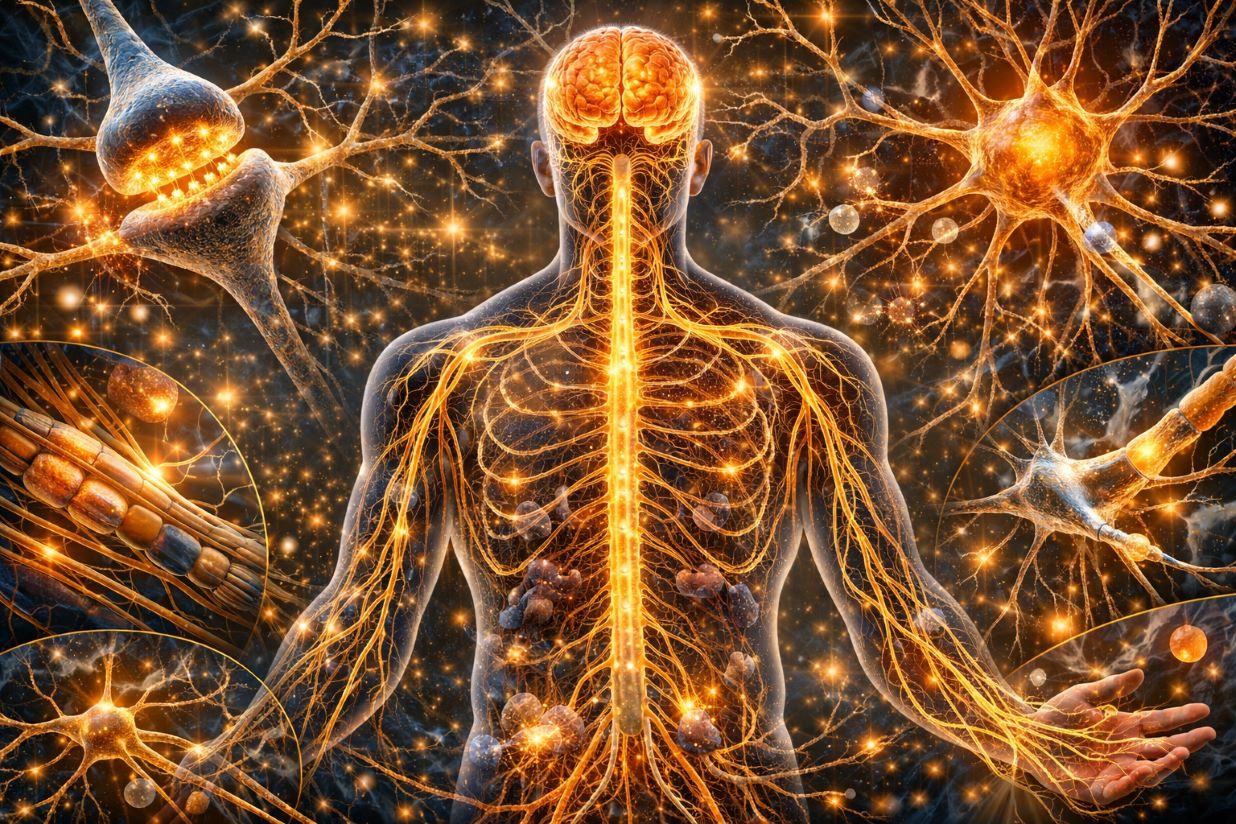
How could a blind process
devoid of feelings,
develop & coordinate such
fine-tuned sensitivity?
(See a far greater hurdle for orthodox evolution in the article:
'The Symphony Before the Composition')

These reflexes are enhancements
that improve the quality of our lives;
and numerous though they are,
have little to do with survival.
